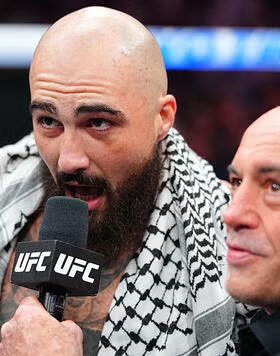
Gable Steveson entered UFC 331 as an Olympic gold medalist, unbeaten MMA prospect and one of the largest betting favorites the sport had ever seen. Twelve seconds later, Sean Sharaf had knocked him out, shattered a sportsbook record and transformed a life that, only weeks earlier, included staggering debt, bankruptcy plans and sleeping on the floor.
Three weeks before Sean Sharaf walked into the Octagon at UFC 331, there was nothing glamorous about his life. There was no championship belt on the wall, no endorsement deal waiting, no financial security and no guarantee that he would even remain on the UFC roster much longer. Sharaf was sleeping on a mat on the floor with his belongings packed into luggage, struggling through serious financial problems and preparing for a fight almost everyone expected him to lose. By the time he walked out of the cage in Los Angeles, he had authored one of the most improbable moments in UFC history.
 [#6 HW]
  [#5 FW]
  [#17 FW]
  [#14 BW]
  [#29 BW]