
Champions aren’t just born—they’re made. Competitive superiority among all outstanding athletes begins with advanced mental training methods. A victory depends entirely on mental control because the mind regulates decisions and reactions and strengthens confidence. Athletes with no mental readiness experience failure under pressure because talent cannot survive such situations. But how do they do it? A thorough analysis of the techniques that separate champions from other athletes will follow.
Stretching and Flexibility: The Key to Injury Prevention in Any Sport
You find yourself in a competitive atmosphere where adrenaline surges. Then—snap! A single snapped muscle, torn ligaments, or sports-related injuries will conclude the game. It’s quite an awful picture. Most sports injuries result from stiff muscles, restricted joints, and unprepared bodies. Flexibility emerges as the crucial factor at this point.
How Soccer Stars Train for Peak Performance on the Field
Professional soccer players use specialized training methods to achieve outstanding skills during matches. Establishing a precisely designed training plan enables athletes to attain perfect goals during sprints. Today’s elite players utilize advanced scientific methods with disciplined training techniques to surpass the unachievable boundaries of performance excellence ten years ago.
The AI War in Combat Sports—Why Some Coaches Will Fight It, and Why They’ll Lose

For decades, combat sports have been built on tradition—hard work, repetition, and gut instinct. Coaches passed down knowledge, fighters drilled techniques, and improvement came through trial and error.
That era is coming to an end.
AI is doing what experience alone never could— breaking down every strike with surgical precision, and optimizing technique in real time. Fighters who train with AI aren’t just working harder; they’re working smarter, improving in months what used to take years.
This is where combat sports is headed. The only question is: Are you evolving with it, or will you be left behind?

Julian Parker (Founder Form Fighter): Julian is leading the evolution of AI in combat sports, bridging the gap between technology and real-world fight training. As the founder of Form Fighter, he’s pioneering AI-driven analysis that helps fighters and coaches refine technique, improve efficiency, and gain a competitive edge. With a deep understanding of both striking mechanics and machine learning, he’s challenging outdated training methods and pushing the industry toward a more data-driven future.
His work has already gained traction among top athletes and coaches, and as AI becomes an unavoidable force in sports performance, he’s ensuring that combat sports don’t get left behind.
Follow his work as he continues shaping the future of fight training.
What the Correlation Between Viewership Ratings and Sports Betting Tells Us About Engagement
It should be pretty clear that betting on sports events is slowly merging with the broader culture of professional sports and the engagement around it. One of the biggest difference makers is the priority that each of us places when we engage in sports viewership. It also depends on the nature of that sport. Competitions with sparse events can generate a bigger viewership thanks to their exclusivity, while leagues with long annual tenures attract consistency.
The AI Playbook for Combat Coaches: More Revenue, Better Retention in 10 Minutes
The Coaching Ceiling: Why Great Coaches Struggle to Scale

For most combat sports coaches, success is measured by packed classes, dedicated students, and a solid reputation in the gym. But behind the scenes, a frustrating reality sets in:
- You can only make as much as your schedule allows. More students mean more hours in the gym, and burnout is real.
- Beginners drop out before they ever hit their stride. They walk into class, see more experienced students moving effortlessly, and feel like they’ll never catch up.
- One-on-one feedback is limited. In a full class, there’s only so much time to correct individual technique. Serious students crave real feedback, but with limited hours in a day, how can you give everyone what they need?
- Online coaching sounds like a solution, but it’s a technical headache. Setting up video reviews, keeping track of student progress, and scheduling calls—it all adds up to more time, not less.
At the end of the day, the best coaches are stuck between serving their top fighters and nurturing new students—but the reality is that beginners are the ones who need the most attention to stay committed.
So how do you scale your expertise, retain more students, and earn more—without sacrificing your time or effectiveness?
That’s where AI-powered coaching changes the game.
Julian Parker (Founder Form Fighter): Julian is leading the evolution of AI in combat sports, bridging the gap between technology and real-world fight training. As the founder of Form Fighter, he’s pioneering AI-driven analysis that helps fighters and coaches refine technique, improve efficiency, and gain a competitive edge. With a deep understanding of both striking mechanics and machine learning, he’s challenging outdated training methods and pushing the industry toward a more data-driven future.
His work has already gained traction among top athletes and coaches, and as AI becomes an unavoidable force in sports performance, he’s ensuring that combat sports don’t get left behind.
Follow his work as he continues shaping the future of fight training.
Train Like A Professional Boxer – Inside The Daily Regimen Of A Champion
Working hard around the clock may bring you success in technical fields, but it will only result in injuries in boxing. Even professional boxers follow a planned routine that involves intense training, correct diet, and optimal sleep hours to recover the muscles.
While some compete in professional boxing as their passion, others do it just because they’re good at it. The undisputed light-heavyweight champion Artur Beterbiev recently revealed, ‘I’m not a fan of boxing; I only do it as my job.’ Although the statement left many in shock, it perfectly backed the fact that you don’t have to love something to be good at it. A perfect blend of discipline, hard work, and resilience is enough alongside talent to achieve success in boxing, just as Beterbiev has achieved.
Though the undefeated champion from Russia is a unique case, many professional boxers love their profession and follow a specialized training routine to prepare themselves for greatness. Almost every professional boxer has a personalized approach to training, which they follow without sacrificing the conventional training norms. They workout 3 to 5 hours a day, usually six days a week. Professional boxing training involves lots of bag work, strength training, and sparring, which are key in professional bouts. Some professional fighters also incorporate bodybuilding principles, including specific guidelines for how many sets per muscle group for hypertrophy to achieve that perfect blend of muscle mass and explosive power.
How to Enjoy Betting on Combat Sports and Casino Gaming Together
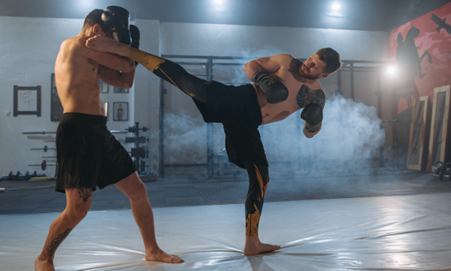
Betting on combat sports and enjoying casino gaming go hand in hand with many gambling enthusiasts. Whether watching a high-stakes UFC fight or spinning the roulette wheel, both activities offer excitement, strategic thinking, and the potential for financial rewards. With online betting platforms expanding, integrating sports betting and casino gaming has never been easier. This article explores the best ways to enjoy betting on combat sports while maximizing your casino gaming experience. From understanding the different types of wagers to leveraging promotions and responsible gambling practices, we’ll provide a comprehensive guide to enhance your gaming experience.
Interview with Hailey Pennington, Professional Boxer and Entrepreneur

Introduction
Hailey Pennington (2-0-0, 2KOs) is a professional boxer and has accomplished quite a bit with hard work and discipline. Currently, she has several business ventures, besides boxing. For instance she owns her gym, is a trainer/coach, as well as a promoter. I am certain that she is likely a mentor to others. Especially, with being young and having many business endeavors. Hailey is a wonderful person for the younger generation to look up to. She has a proven track record with success. Hailey is thriving as a woman, in the combat sports industry in 2025.

Combat Sports & Martial Arts Writer| Partnership Marketing and Digital Strategy Lead (Combat Sports)
I have been an avid viewer of Boxing and MMA for almost three decades. Since 2001, I have enjoyed watching the UFC. I hold an academic background in Gerontology from Madonna University, and spent 25 years working across both clinical and non-clinical healthcare settings. But a lifelong passion for writing and martial arts eventually pulled me toward a new chapter. Today, I write for FightMatrix.com. Additionally, I interview professionals in the Combat Sports sector.
The Similarities Between UFC Fighters and Elite Horse Jockeys: Training, Endurance & Performance
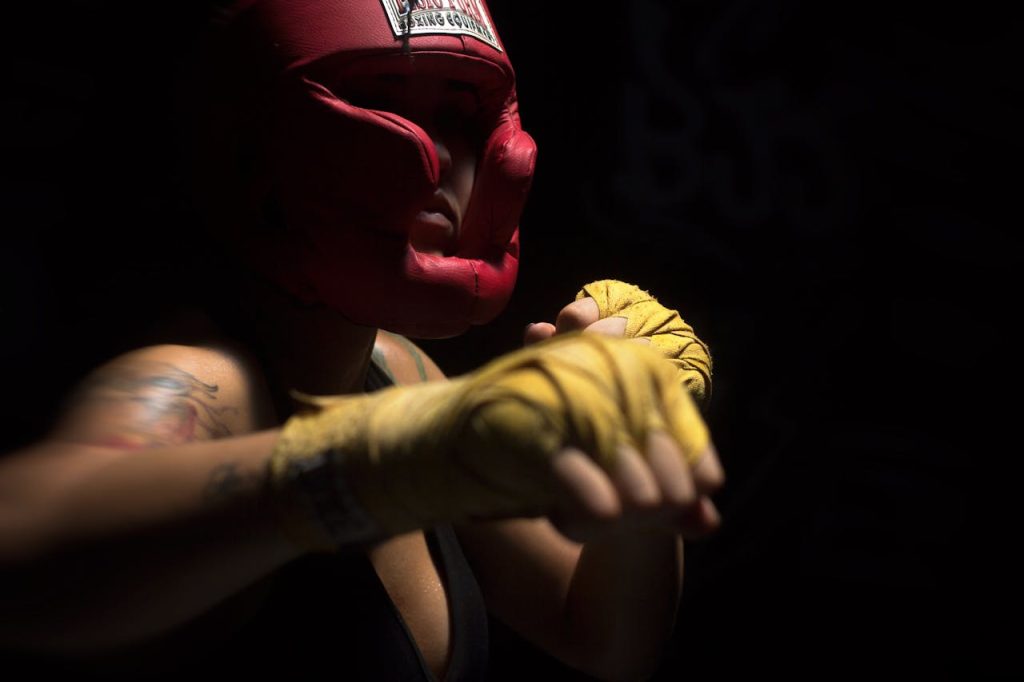
Photo by Rodolfo Clix: https://www.pexels.com/photo/person-wearing-red-head-gear-1575381/
At first glance, UFC fighters and elite horse jockeys seem like worlds apart. On one hand, we have a high-intensity combat sport, and probably one of the most brutal sports out there, and on the other hand we have precision-based tests of skills and endurance, where athletes need to change their lifestyle in order to compete in the big league.
Now, don’t get me wrong, all sports are difficult in their own way, but UFC and horse jockeys are probably one of the top contenders for being one of the hardest-working athletes.
To be honest, if you take a closer look, you’ll find that these two groups of athletes share more similarities than you might expect. First of all, they both demand exceptional physical conditioning, strategic thinking (fast), and an almost inhuman level of endurance.
This inspired us to compare elite horse racing jockeys, and some of the most successful UFC fighters and find more similarities.