
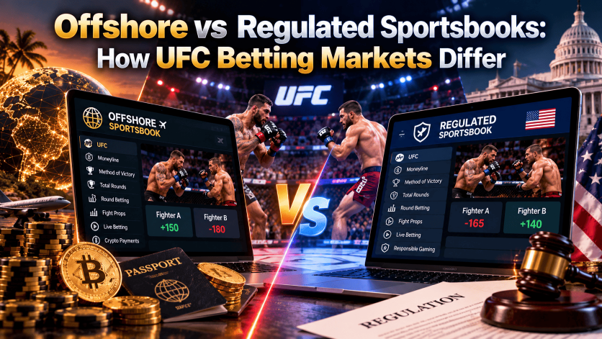
UFC bettors in the US can encounter very different markets depending on where they place a wager. Regulated sportsbooks operate under state rules, while offshore platforms follow licensing requirements outside the US. Those differences can affect available props, live markets, betting limits, account verification, and payment options. Understanding how each model works helps bettors evaluate UFC lines beyond the headline odds and see what actually separates one sportsbook from another.
Regulation Creates the Main Divide
Legal sports betting in the US is regulated at the state level. Sportsbooks must meet the rules of each jurisdiction where they operate.
That framework affects where customers can wager and which betting products operators can offer. Operators commonly use location verification to confirm that bets originate within an authorized jurisdiction.
State regulators also oversee licensed operators and establish requirements for legal wagering. The Nevada Gaming Control Board, for example, regulates gaming activities and licensed operators within Nevada.
Offshore sportsbooks operate outside these state regulatory systems. Their licenses, consumer protections, and dispute procedures depend on the jurisdiction overseeing each operator.
Core UFC Markets Are Usually Similar
The basic UFC betting menu is recognizable across both sportsbook types. The moneyline remains the central market for most fights.
Bettors simply choose which fighter will win. Favorites carry shorter odds, while underdogs generally offer larger potential returns.
Totals are another common option. These markets ask whether a fight lasts longer or shorter than a specified number of rounds.
Method-of-victory betting goes deeper. Bettors can predict whether a fighter wins by knockout, submission, decision, or another listed outcome.
Exact-round markets add another layer. A bettor might select a fighter to win specifically in Round 2, for example.
Offshore Sportsbooks Can Offer Broader Prop Menus
The biggest differences often appear beyond standard fight lines. When reviewing some offshore betting sites, UFC bettors may find additional round, method, parlay, and fighter-specific markets. Regulated operators may face state-specific restrictions on certain wager types. Their market menus can also depend on internal risk controls and applicable wagering rules.
This means two sportsbooks covering the same UFC card may present noticeably different betting selections.
Method-of-Victory Markets Show the Difference
Method-of-victory props are particularly useful when examining market depth. A basic sportsbook might provide knockout, submission, and decision options.
A deeper menu can separate those outcomes by fighter. Bettors could then back one fighter to win by submission or another by decision.
Some books go further by combining method and round. That creates selections such as Fighter A by knockout in Round 1.
These markets usually carry longer odds because the required outcome becomes more specific. They can also produce wider pricing differences between sportsbooks.
Market depth should not be confused with better value. More choices simply give bettors more ways to express a prediction.
Live UFC Betting Can Vary Considerably
UFC is particularly suited to live betting because momentum can change quickly during a fight. Odds can move after takedowns, knockdowns, submission attempts, or completed rounds.
Live market depth differs between operators. One sportsbook may keep only fight-winner betting open, while another offers several in-play options.
Pricing speed matters here. Markets may be suspended when significant action occurs and reopen with updated odds.
UFC has also introduced integrity monitoring around wagering activity. Its agreement with U.S. Integrity added monitoring designed to identify unusual betting patterns around UFC events.
That oversight is particularly relevant when odds change rapidly around injuries, fighter information, or unusual betting activity.
Bet Builders and Parlays Add Another Layer
UFC betting is no longer limited to single-fight wagers. Some sportsbooks allow customers to combine multiple selections from an event.
Traditional parlays can include winners from several fights. More advanced products may combine selections connected to the same bout.
Same-event products can include a fight winner alongside another compatible market. The available combinations depend on the sportsbook’s trading rules and technology.
Availability can also vary between jurisdictions. A wager offered by an operator in one state may not necessarily appear for customers elsewhere.
Bettors should check which selections can actually be combined before building a wager.
Betting Limits May Not Match
Market availability tells only part of the story. Betting limits can also differ between regulated and offshore sportsbooks.
Limits may change according to the fight, wager type, customer account, and time before the event. Major UFC main events can attract substantially more betting activity than preliminary bouts.
Prop markets often have different limits from main moneylines. A highly specific round-and-method wager may accept less money than a straightforward fight-winner bet.
Offshore platforms set their own risk policies within their operating framework. Regulated US sportsbooks combine internal risk management with applicable state requirements.
Published maximum payouts also deserve attention. They are not necessarily the same as maximum stake limits.
Account and Payment Rules Are Different
UFC markets might look similar on screen, yet the account experience can differ considerably.
Regulated US sportsbooks generally require identity and location checks. Customers must also meet the legal betting age in their jurisdiction.
Payment options commonly include bank transfers, debit cards, PayPal, and other supported methods. Availability varies by state and operator.
Offshore sportsbooks can provide a different banking mix. Some support cryptocurrencies alongside cards, e-wallets, and alternative payment services.
Players should examine deposit limits, withdrawal rules, processing times, verification requirements, and fees before funding an account. These details can matter more than an additional UFC prop market.
Market Variety Is Only One Factor
A larger UFC betting menu does not automatically make one sportsbook more suitable than another. Market depth is only one part of the decision.
Bettors should consider licensing, account protections, payment rules, limits, settlement policies, and customer support alongside available wagers.
The differences become most visible with specialized UFC markets. Moneylines and totals are widely available, while detailed props and live options can vary considerably.
Checking those details before a fight card starts makes sportsbook differences easier to understand. It also prevents a long list of markets from becoming the only factor in choosing where to bet.