
An accidental eye poke ended Tom Aspinall’s fight with Ciryl Gane before the first round was over. The official result was a no contest. An accidental eye poke also cut short Song Yadong’s bout with Henry Cejudo, but that fight produced a winner on the scorecards. Both were UFC main events scheduled for five rounds.
The difference was how much of each fight had taken place before it was called off. To understand an early result, three details matter. What caused the stoppage? How far had the fight gone? And what did the rules in force that night say about using the scorecards?
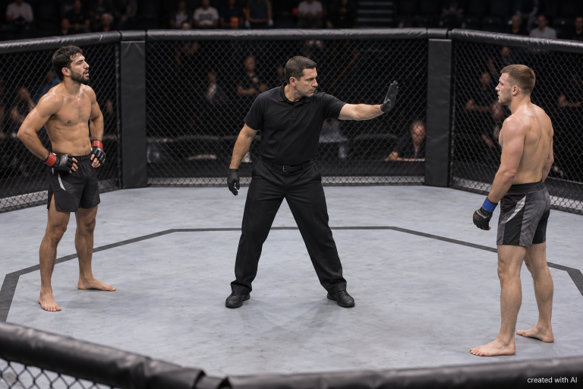
The Referee Has Two Calls to Make
When an eye poke occurs, the referee can pause the action and have the injured fighter assessed. If the fighter can continue, the bout may resume. If the referee ends it because of the injury, the classification of the foul and the timing of the stoppage determine what happens next.
The referee deals with the foul and decides whether the fight can continue. The judges score the action they saw. Their cards determine the result only if the rules allow the fight to go to a decision. A fighter can have the better of the early exchanges and still leave without a win on their record.
The stage an interruption reaches also matters in an online casino. A player comparing online pokies can check the game rules for what happens if the connection drops after a stake has been accepted. A completed spin can keep its recorded result even if the reel animation never finished on screen. A bonus feature that still needs a selection can reopen at that point when the player reconnects. The rule depends on whether the round has a result or still needs input.
Two Eye Pokes and Two Official Results
At UFC 321 in Abu Dhabi, Aspinall and Gane stopped at 4:35 of the first round. In Seattle, Cejudo resumed after the foul and made it to the end of the third. He was unable to continue into the fourth. The official results show how that difference played out.
| Fight | Point the bout reached | Official result |
| Tom Aspinall vs. Ciryl Gane, UFC 321 | Stopped at 4:35 of round one | No contest |
| Henry Cejudo vs. Song Yadong, UFC Seattle | Three rounds completed | Song won by technical decision, 29–28, 29–28 and 30–27 |
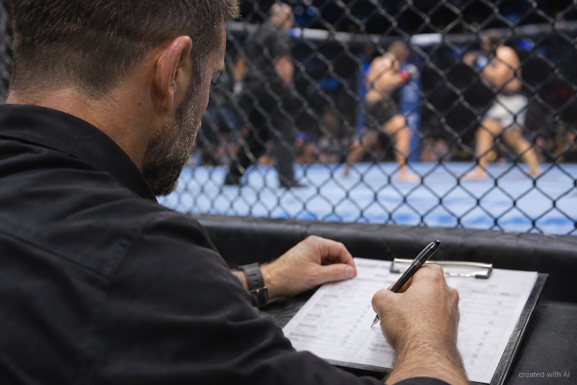
The official Seattle scorecards show that all three judges had Song ahead. Two gave him two rounds and one gave him all three. Completing the third round made a decision possible. The judges’ assessment of the action determined who won it.
The published scorecard for Aspinall–Gane has blank judging fields. The fight stopped before the end of round one, so there was no decision to read off the cards. That explains why an argument about who looked better in those opening minutes has no bearing on the official result.
A Partial Round Can Still Count
The accidental-foul provision in the Unified Rules of MMA sets the threshold at two completed rounds for a three-round bout and three completed rounds for a five-round bout. The rules in force at the event matter, particularly when comparing fights held under different commissions or different editions of the rules.
The threshold tells officials when the cards can determine the result. Once a fight qualifies, the Unified Rules also call for scoring an incomplete round. If the fighters traded strikes or grappled in the fourth before an accidental foul ended the bout, those exchanges can affect the decision. If no action occurred, the judges have discretion to score that round even.
A referee’s point deduction is a separate part of the calculation. A judge might score the action 10–9 for a fighter who then loses a point for a foul. The adjusted score becomes 9–9. Reading the round score alongside any deduction helps explain how a close card came out the way it did.
What the Result Line Leaves Out
A fight database can record the method in a couple of words. The result line is enough to tell who won or whether the bout ended as a no contest. Reconstructing how officials reached that result takes a few more details.
- Was the stoppage tied to a legal technique or a foul? If it was a foul, how did the referee classify it?
- How many rounds were scheduled and how many were complete when the fight ended?
- If the rules sent the fight to the judges, what did each scorecard actually say?
In Seattle, the third-round bell was the detail that made a decision possible. In Abu Dhabi, the first-round bell never came. The result lines record where each fight ended. The action between the foul and the stoppage explains how one of them got to the judges.