
What makes a mixed martial arts fighter successful inside the cage?
Is it powerful punches, accurate kicks, strong wrestling skills, or the ability to control an opponent on the ground? In reality, MMA requires a combination of these abilities, along with timing, balance, and tactical awareness.
Mixed martial arts brings together techniques from boxing, Muay Thai, wrestling, Brazilian Jiu-Jitsu, and other combat sports. Each discipline contributes different skills, allowing fighters to attack, defend, and adapt to changing situations during a contest.
However, knowing several fighting moves is not enough. Professional fighters must understand when to use each technique, how to combine different movements, and how to respond when an opponent changes strategy.
Here are 10 essential MMA techniques that play an important role in professional fights, along with explanations of how fighters use them inside the cage.
1. The Jab: A Fundamental Striking Technique
The jab is a basic MMA punch performed by extending the lead hand while maintaining balance. Fighters use it to measure distance, interrupt attacks, and create openings for stronger strikes.
A well-timed jab can also force an opponent into a defensive position. Professional fighters often combine it with a cross, overhand punch, or takedown attempt to maintain control during striking exchanges.
2. The Overhand Punch: Generating Power Through Movement
The overhand is a powerful looping punch commonly used in boxing and MMA. It travels along a curved path towards an opponent’s head, often passing around their defensive guard.
Fighters generate force by coordinating their hips, shoulders, and upper body. The technique works particularly well when combined with feints or jabs, although poor timing can leave fighters exposed to counterattacks.
3. The Roundhouse Kick: Attacking From Different Angles
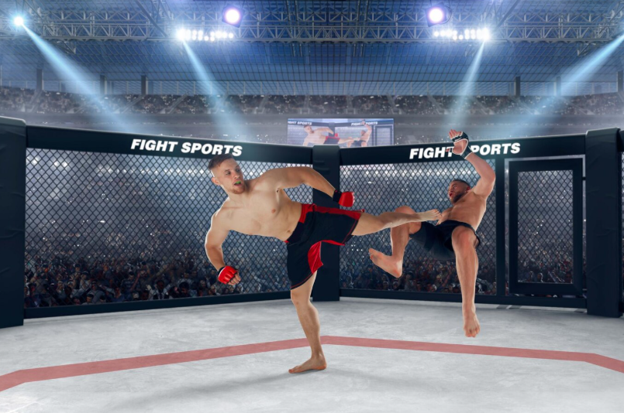
The roundhouse kick is widely used in Muay Thai, kickboxing, and MMA. Fighters rotate their hips and swing their kicking leg towards an opponent’s legs, body, or head.
Low kicks can affect balance and mobility, while body and head kicks create different attacking opportunities. Professional fighters often combine these kicks with punches to make their movements less predictable and create openings.
4. The Clinch: Controlling Close-Range Exchanges
The clinch is a close-range fighting position where opponents compete for control of each other’s upper body. It combines techniques from Muay Thai, wrestling, and other grappling disciplines.
Fighters use the clinch to control movement, deliver permitted strikes, and prepare takedowns. It is particularly useful near the cage, where controlling an opponent’s position can create tactical advantages.
5. The Single-Leg Takedown: Controlling an Opponent’s Balance
The single-leg takedown is a wrestling technique that involves controlling one of an opponent’s legs to disrupt their balance and bring them to the ground.
Fighters often attempt this movement during striking exchanges or when an opponent moves forward aggressively. However, success depends on timing and positioning, as experienced opponents can defend by maintaining balance or escaping the grip.
6. The Double-Leg Takedown: A Key Wrestling Technique
The double-leg takedown involves attacking both of an opponent’s legs to bring them to the ground. Fighters commonly prepare this movement through level changes, feints, or striking combinations.
A successful attempt can help establish top position and ground control. However, opponents may defend using sprawling and hip positioning, making timing and preparation essential for executing the technique effectively.
7. The Sprawl: Defending Against Takedown Attempts
The sprawl is a defensive wrestling technique used to prevent certain takedown attempts. Fighters move their legs backwards and apply downward hip pressure to make it difficult for opponents to control their lower body.
A successful sprawl can help fighters remain standing or transition into a favorable grappling position. Proper timing and body positioning are essential for effective defence.
8. The Trip: Using Balance to Bring an Opponent Down
Trips are grappling techniques commonly used in wrestling, judo, and MMA. They involve disrupting an opponent’s balance, often by targeting a supporting leg during close-range exchanges.
Fighters use inside and outside trips to bring opponents to the ground without relying entirely on traditional wrestling shots. Their effectiveness depends on timing, upper-body control, and coordinated movement.
9. Guard Passing: Improving Position During Ground Fighting
Guard passing is an important grappling technique that involves moving past an opponent’s defensive leg position while fighting on the ground.
Fighters use it to establish stronger positions, such as side control or mount, creating opportunities for strikes and submissions. Effective guard passing requires balance, positional awareness, and careful movement to avoid reversals or submission attempts.
10. The Back Mount Escape: Defending Against a Dangerous Position
Back mount, also known as back control, is a dominant grappling position where one fighter controls an opponent from behind. It creates opportunities for submissions, particularly the rear-naked choke.
Escaping this position requires protecting the neck, controlling the opponent’s grips, and improving body positioning. Professional fighters practice these defensive movements to reduce submission risks and regain a safer position.
How Do Professional MMA Fighters Combine These Techniques?
MMA fighters combine striking, wrestling, and grappling to respond to different situations. For example, a fighter might use a jab before attempting a takedown or transition into ground control after a successful clinch.
Fans also follow MMA through fight statistics, sports news, and entertainment platforms such as vegas338. However, understanding fight performance requires knowledge of technique, timing, and strategy.
Successful fighters know how to connect offensive and defensive movements rather than relying on a single fighting style.
Why Proper Training Matters When Learning MMA Techniques
Learning MMA techniques requires proper coaching, regular practice, and attention to safety. Beginners should focus on balance, footwork, defensive positioning, and basic movements before attempting advanced techniques.
Experienced coaches help fighters correct mistakes and improve their skills through controlled drills and supervised sparring. Consistent training also helps fighters combine techniques more effectively.
Conclusion
MMA combines striking, wrestling, and grappling techniques that require timing, balance, and tactical awareness. Understanding essential moves such as jabs, kicks, takedowns, and defensive escapes helps beginners build foundational knowledge while allowing fans to better appreciate professional MMA competitions.