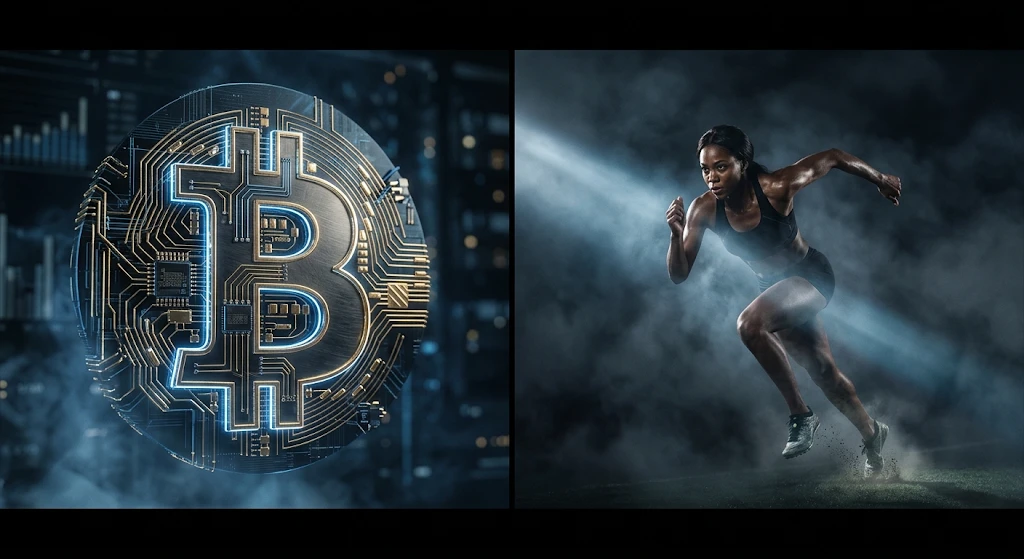
For the last decade, the financial narrative has been dominated by a single obsession: digital scarcity. Bitcoin revolutionized our understanding of value by introducing a hard mathematical cap – 21 million coins, written into immutable code. It convinced the world that the ultimate store of value is an asset that cannot be inflated, duplicated, or artificially expanded.
Yet, while millions monitor mining difficulty algorithms and hash rates, a far more fundamental form of scarcity goes largely unnoticed: the absolute limits of human endurance and biological energy.
Digital assets exist in an infinite virtual canvas. Energy, time, and physical vital capacity operate within strict thermodynamic boundaries. As artificial intelligence automates cognitive labor and algorithms generate endless synthetic reality, the unforgeable proof of work is shifting from computer servers back to the human body.
The Limits of Synthetic Abundance
The rise of automation creates a paradox of abundance. When digital creation, automated reasoning, and tokenized wealth become effortless to replicate, their marginal cost approaches zero.
By contrast, human endurance cannot be copy-pasted or accelerated through cloud computing.
- Unforgeable Physical Proof of Work: A marathon time or mental stamina under extreme stress cannot be minted via smart contract.
- Non-Transferable Vitality: Biological resilience requires direct, non-delegable effort over time.
- Biological Bottlenecks: Neural processing speed, muscular endurance, and cellular regeneration have hard evolutionary ceilings.
While Bitcoin relies on cryptographic proof of work, human vitality represents natural proof of existence. You can buy Bitcoin, but you cannot buy the biological adaptation required to summit a mountain or maintain razor-sharp focus through sixteen hours of critical decision-making.
Energy Economics: Computational Power vs. Human Vitality
Mining Bitcoin consumes vast amounts of electrical energy to solve artificial mathematical puzzles. The human organism, however, converts biological energy with astonishing metabolic efficiency. The true bottleneck of the next century will not be computing power – it will be human stamina and cognitive longevity.
In hyper-competitive environments, maintaining baseline performance requires deliberate recovery and focused rituals. Peak human output is impossible without intentional nourishment and steady, jitter-free energy routines. For high-performers managing both physical stamina and high-stakes financial operations, relying on steady organic energy practices like taking a ritualistic break for crypto casino becomes an essential component of sustaining biological performance over time.
When synthetic outputs saturate every sector, genuine human capacity becomes the rarest premium asset in the global market.
Why Human Endurance Outvalues Digital Tokens
While digital assets store purchasing power, human endurance generates actual reality. Cryptographic security protects wealth, but physical and mental stamina determine the capacity to execute ideas, withstand prolonged stress, and drive innovation.
- Intrinsic Utility: Digital tokens are medium-of-exchange vehicles; biological health is the foundational precondition for experiencing life.
- Immunity to Algorithmic Devaluation: AI can out-calculate human logic, but it cannot emulate physical resilience, real-world grit, or emotional endurance.
- Absolute Non-Fungibility: Every individual’s physical capacity is uniquely tied to their genetic structure and lifestyle discipline.
The Ultimate Reserve Asset
Bitcoin taught humanity the value of hard limits in a world of endless fiat printing. But as technology continues to eliminate friction across digital landscapes, the ultimate limit is not found in a blockchain ledger – it is found in our finite biological framework.
Financial capital without physical stamina is inert power. As artificial systems scale infinitely, the most valuable reserve asset on Earth will not be the tokens stored in cold wallets, but the irreplaceable, unscalable capacity of human endurance.