
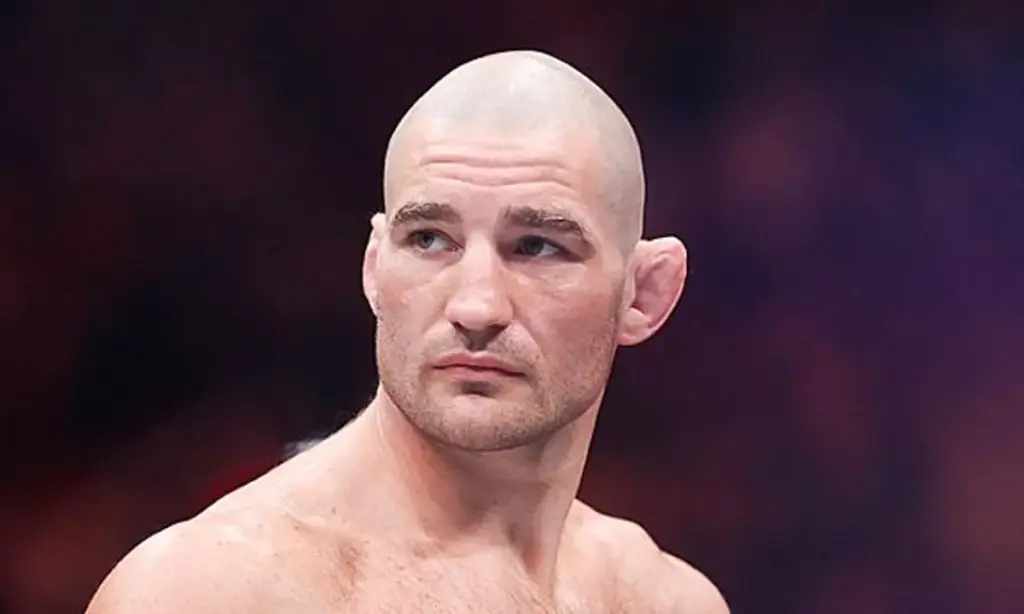
The UFC’s planned White House event was already one of the most unusual spectacles in the history of American sports. Now, before a single fighter has made the walk, the event has become a political controversy involving Sean Strickland, President Donald Trump, Israel, active-duty troops, and a massive UFC structure sitting on the South Lawn.
UFC Freedom 250 is scheduled for June 14th on the White House grounds, as part of the celebration of America’s 250th anniversary. The date also falls on Flag Day and President Trump’s 80th birthday. The event is expected to feature a full Octagon on the South Lawn, a large patriotic lighting structure known as “The Claw,” and a crowd made up of invited guests, UFC insiders, administration invitees, celebrities, and active-duty service members. It is not a public-ticketed event. It has been reported that about 5,000 spectators are expected to attend, with access controlled through the UFC, the Trump administration, or military invitations.
But, the biggest story surrounding the event may now be who will not be there. Sean Strickland, the outspoken UFC middleweight champion, says he has been banned from attending. Strickland recently regained the 185-pound title by defeating Khamzat Chimaev by split decision at UFC 328, but according to his own account, that championship status was not enough to get him cleared for the White House card. When asked online why he had been banned, Strickland said he had “made fun of Israel and Epstein” and claimed he was the only male American champion barred from the event because of his comments about Trump and Israeli Prime Minister Benjamin Netanyahu.
Strickland expanded on the claim in a video posted to social media, saying UFC officials called him and apologized because the White House would not clear him. In his usual sarcastic style, he framed the rejection as proof that he was “not Israeli enough” to attend what he mockingly called “UFC 250: Israel edition.” He then criticized Trump, Netanyahu, the handling of the Epstein files, and U.S. military action involving Iran, while suggesting that his exclusion was political punishment for speech.
The remarks quickly pushed the story beyond MMA. Strickland has long been one of the UFC’s most controversial voices, but this controversy landed directly at the intersection of sports, presidential politics, foreign policy, and free speech. Strickland had previously said he did not want to attend the White House event because he did not want to “hang out with the f*cking Epstein list.” After saying he was banned, he suggested he might still show up outside the gates with his UFC belt and protest the Trump administration.
Former Georgia congresswoman Marjorie Taylor Greene amplified Strickland’s comments on X, calling him a “great American” and accusing the Trump administration of persecuting him for exercising his First Amendment rights. Her reaction added another political layer to the controversy because Greene, once one of Trump’s strongest allies, has recently criticized the administration over its handling of the Epstein files.
While Strickland’s comments dominated the combat sports conversation, the event itself was already drawing scrutiny, as President Trump suggested the UFC’s massive lighting structure, “The Claw,” might remain on the White House South Lawn even after the fights. In a TikTok video, Trump compared the structure to the Eiffel Tower, noting that the Eiffel Tower was originally intended to be temporary, before Paris decided to keep it. Trump said the UFC structure was “quite attractive” and added that “maybe we’ll never, ever take it down.”
The comment may have been a joke, but the structure has already altered normal White House operations. CNN reported that the Claw and surrounding UFC setup occupy the area where Marine One typically lands, forcing Trump to motorcade to and from Joint Base Andrews for Air Force One trips.
It has also been costly. The same report noted that the UFC is covering expenses tied to the event and construction, with the cost estimated around $60 million. Dana White also told Sports Business Journal that UFC expects to spend about $700,000 just to replace the South Lawn grass after the event.
The military component of the event has created its own controversy. Military Times reported that about 1,200 tickets have been set aside for active-duty troops. According to an internal document reviewed and authenticated by the outlet, service members selected to attend must meet physical standards, including a waist-to-height ratio of 0.55 or less. Marines must meet an even stricter standard of 0.52 or less. Attendees must also satisfy their service-specific fitness requirements.
The document also said selected service members should be “genuine UFC fans,” and commanders were encouraged to choose junior enlisted troops and junior officers. While commands were asked to select service members from outside the national capital region, the military would not pay for their travel. That means some troops invited to attend one of the most heavily promoted sports events ever staged at the White House may have to cover their own transportation costs.
That is what makes this moment different from a normal UFC controversy. The promotion has always thrived on chaos, conflict, and cultural tension. Dana White built the UFC into a sports empire that often runs toward controversy instead of away from it. But, UFC Freedom 250 has moved beyond the usual fight-week noise. It is no longer just about Ilia Topuria vs. Justin Gaethje or Alex Pereira vs. Ciryl Gane. It is now about access, politics, patriotism, free speech, military optics, and the transformation of the White House lawn into the most symbolic combat sports venue in the world.
By the time the fighters step into the cage on June 14th, the event may already have delivered its biggest fight.
Andrew Carswell is a combat sports columnist and college writing professor, based in Las Vegas, NV, whose work examines the intersection of fighting, media, business, and culture. His commentary and analysis have been featured in various magazines, newspapers, and media outlets, including Yahoo! News, and USA TODAY. Blending journalistic insight and experience with a fan’s perspective, Carswell writes about the fight game as both a cultural phenomenon and a global business.
The fuck are you on about.
I’ve enjoyed educating even a bot!
Proof!
Cowards are everywhere…so only slavishly favoured comments can be published? More proof of the corrupt system! BYE!
Enjoy again the TOTAL humiliation of Shuki Farage by the Irish hero Paddy McCorry!
It is great that these guys like Paddy McCorry and Mr Strickland…really tough guys that it would take four or five overweight cops and about eight showing scalp flat tops to restrain, and fifteen so-called ICE agents, and a score of those wet blouses in the misnamed IDF, (it is IOF!) The great thing is they know it…a mere bunch of bullies! Just enjoy watching again the TOTAL humiliation of Shuki Farage. Brings tears of pleasure to one’s eyes.