
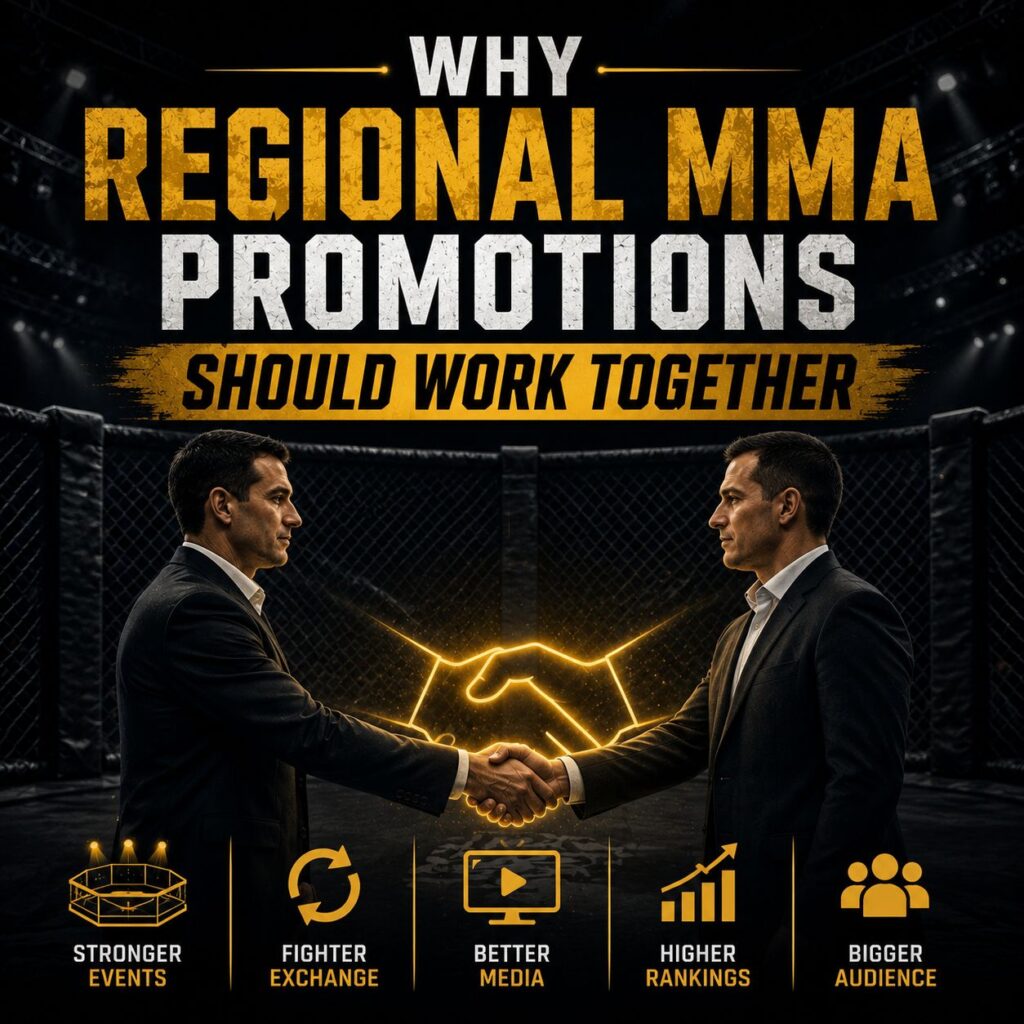
Regional MMA promotions are the foundation of the global mixed martial arts ecosystem. Nearly every professional fighter begins a career in a local promotion before reaching the international stage. These organizations discover talent, organize events, build local fan bases, and provide athletes with the experience necessary to progress.
Despite their importance, many regional promotions continue to operate independently, often viewing neighboring organizations as competitors rather than potential partners. As a result, they frequently compete for the same fighters, sponsors, and audiences while facing many of the same financial and organizational challenges.
The future of regional MMA depends not only on producing great events but also on building stronger relationships between promotions. Collaboration is not about giving up independence—it is about creating opportunities that are difficult to achieve alone.
Stronger Events Through Cooperation
One of the most effective ways for regional promotions to grow is through co-promoted events.
When two or more organizations combine their fighters, officials, production resources, and promotional efforts, the quality of an event immediately increases. Fans enjoy fresh matchups instead of repeatedly seeing the same local rivalries. Fighters gain the opportunity to test themselves against opponents from different cities or countries. Promoters share organizational costs while expanding the reach of their events.
Across Europe and many other regions, regional promotions already exchange athletes and occasionally organize international fight cards together. These collaborations demonstrate that successful partnerships do not require massive budgets. They require trust, communication, and a shared commitment to developing the sport.
For spectators, these events feel bigger. For athletes, they create meaningful career opportunities. For promoters, they strengthen credibility and expand visibility.
Fighter Exchange Benefits Everyone
No athlete develops by facing the same opponents year after year.
One of the greatest strengths of cooperation is the ability to exchange fighters between organizations. Every new opponent presents different skills, strategies, and competitive challenges that accelerate development.
International experience also prepares athletes for larger opportunities. A fighter who has competed in several countries against diverse opposition is often better prepared for the next level than someone whose entire career has been limited to one local circuit.
From a promotional perspective, fighter exchanges help maintain fresh fight cards while reducing the pressure to constantly recruit new talent.
Collaboration Creates Better Marketing
Marketing remains one of the biggest challenges for regional promotions.
Most organizations work with limited budgets and small teams. Acting independently often means several promotions compete for the attention of the same audience within the same period.
Collaboration changes that dynamic.
When multiple organizations promote the same event, each gains access to new audiences through shared social media campaigns, cross-promotion, interviews, and digital content. Modern social media platforms reward collaboration by increasing engagement and expanding organic reach.
Instead of several small promotional campaigns competing against one another, regional promotions can create a larger campaign that benefits every participating organization.
Building Stronger Media Products
Modern broadcasters and streaming platforms are no longer interested in isolated events alone. They are looking for consistent, high-quality programming.
Individual regional promotions often struggle to produce enough content to attract television networks or digital distribution partners. However, cooperation creates new possibilities.
Several organizations working together can build regular programming schedules, produce television-quality broadcasts, develop documentary content, and create valuable video libraries. Combined content becomes significantly more attractive for broadcasters, FAST channels, streaming services, and international media distributors.
The long-term value is not created by one successful event but by a consistent flow of professional content throughout the year.
Better Competition Leads to Better Rankings
Organizations such as FightMatrix evaluate athletes regardless of which promotion they compete in.
When fighters compete across multiple regional organizations, rankings become stronger because athletes are tested against a wider variety of opponents. Cross-promotional competition provides more meaningful comparisons between fighters from different regions and countries.
For athletes, this creates additional opportunities to gain international recognition without immediately joining a major organization.
For the sport, it creates a healthier competitive environment.
Independence and Cooperation Can Coexist
Some promoters hesitate to collaborate because they fear losing control over their brand or identity.
In reality, cooperation does not require organizations to merge.
Each promotion can maintain its own championships, management, sponsors, and identity while working together in areas where collaboration creates mutual value.
Healthy competition inside the cage can exist alongside strong partnerships outside of it.
The objective is not to become one organization. The objective is to create a stronger ecosystem where every promotion benefits from shared opportunities.
What Continues to Hold Regional MMA Back?
The challenges facing regional MMA are remarkably similar across different countries.
Many organizations focus exclusively on their local markets. They rarely develop international partnerships. Marketing efforts remain isolated, content libraries are underutilized, and opportunities for fighter exchanges are often overlooked.
As a result, promoters frequently compete for the same sponsors, athletes, and audiences instead of expanding the overall market together.
The issue is rarely a lack of ambition.
More often, it is the absence of long-term cooperation.
A Sustainable Vision for Regional MMA
Regional MMA does not need larger budgets to become stronger.
It needs stronger networks.
Regular co-promoted events, international fighter exchanges, shared media production, coordinated marketing, and long-term partnerships can significantly increase the value created by every participating organization.
These initiatives are realistic for promotions of every size because they rely primarily on cooperation rather than financial investment.
As regional promotions become more connected, they also become more attractive to broadcasters, sponsors, media partners, and fans.
Conclusion
Regional promotions are not competing to become the next global powerhouse. Their real mission is to develop athletes, organize professional events, and create sustainable organizations that can continue serving their communities and the sport.
Working together makes each of those goals easier to achieve.
When promotions collaborate, fighters receive better opportunities, fans enjoy more competitive events, sponsors reach larger audiences, broadcasters gain stronger programming, and regional MMA grows as a whole.
The future of regional MMA will not be built by isolated organizations. It will be built by connected ones.

MMA Promoter | Event Organizer | Analyst
Founder & President of Real Fight Promotion (RFP) – one of the longest-running and most recognized MMA organizations in Ukraine. Organizer of 100+ MMA events. Contributor, analyst, and Trusted Promoter collaborating with leading global MMA platforms.