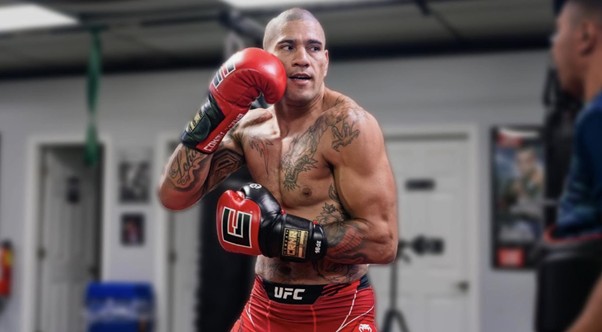
Right now, the conversation around Alex Pereira next fight feels unusually sharp even by UFC standards. And the reason is straightforward enough. It’s not about defending a championship anymore or even about making up for a missed chance. Pereira has already surrendered his light heavyweight belt to Magomed Ankalaev at UFC 313, dominated in the rematch at UFC 320 with an early stoppage to regain his crown, and now has turned his back on 205 pounds to go after something never seen before in UFC, a title in his third weight class. His official game plan is set for June 14, 2026, when he will face Ciryl Gane for the interim heavyweight championship at UFC Freedom 250 on the grounds of the White House.
That shift has changed the tone of the whole Pereira conversation. The buzz now stretches beyond hardcore MMA circles, and even the betting side of the sport has picked up fresh energy around Unlimluck, a casino where fans can get bonuses for bets on future UFC fights while following the build toward the next big heavyweight storyline. In Pereira’s case, that upbeat angle fits the moment, because every serious update around his future has made the stakes feel larger rather than smaller.
Alex Pereira knockout remains the scariest variable in every room
Damage isn’t the only driving force behind Pereira’s willingness to shape matchmaking to revolve around him, but it is the most significant. From 2024 on alone, Pereira has KO’d Jamahal Hill in UFC 300, Jiri Prochazka in UFC 303, and then Khalil Rountree Jr. in UFC 307. That streak gave Pereira an incredibly unique skillset among the best title holders by allowing him to reduce a difficult championship contest into a matter of mere exchanges. The official UFC record page still appears as a list of destruction and not as the progression of a typical challenger’s journey upward.
That is also why Pereira’s defeat against Ankalaev in March 2025 was never enough to cool down the hype. Pereira suffered a five-round unanimous defeat against Ankalaev at UFC 313, but the UFC’s summary of the event still considered it a close bout where Ankalaev seized the initiative in critical moments and won on all three scorecards. Nevertheless, even the UFC acknowledges that a rematch would come as no surprise. Indeed, the rematch did occur, and Pereira responded with the exact same ferocity that could reset an entire weight class in an instant. The UFC 2026 light heavyweight preview states that Pereira steamrolled Ankalaev within 90 seconds at UFC 320. Suddenly, Alex Pereira next fight stopped sounding like a rematch question and started sounding like a history question.
This shift becomes very important when fighting against Ciryl Gane. The reason behind it is that Gane is not an easy heavyweight who simply walks into left hands. Dana White has already set up the fight for him as a difficult one for that reason alone since he is a fighter who does not walk as much as others. Instead, he dances around, and people have to get themselves grounded again in order to strike him. One more Alex Pereira knockout would make the whole three-division conversation explode.
When did Alex Pereira start training and why that old question still matters now
The reason why the story of Pereira feels unique even now is because Pereira’s story was never constructed in the same way that typical success stories are usually structured for an aspiring fighter. The description on the official website of GLORY says that Pereira first entered a kickboxing gym at the age of 21 after years of manual labor and excessive drinking in Sao Paulo. This particular detail stands out to be the one that makes Pereira’s career stand out since it shows how hungry and fresh he was.
That background is more than biography filler. The question of when did Alex Pereira start training keeps coming back because it changes how his future gets judged. He may be 38, but he doesn’t come with the kind of accumulated wear and tear that boxers who spent their teenage years battling in national programs do. He’s a kickboxer who’s traveled through many miles and whose face tells stories about his many years in the sport, but what really accounts for his quick transitions between classes is the relatively late start he made in boxing. It also colors the read on Alex Pereira next fight, because his timeline has never followed normal MMA logic anyway.
This could be one of the reasons why the decision to make his next move to the heavyweights was not seen as a hasty one. It appeared to be a carefully thought-out step toward a new chapter. Following his comeback to reclaim his title at 205 pounds, Pereira did not appear to behave like an individual who wanted to protect his dwindling territory. According to Reuters in late February, Pereira had vacated his light-heavyweight championship, while ESPN revealed that Jiri Prochazka and Carlos Ulberg were set to battle for the available title at UFC 327.
Alex Pereira nationality is part of the brand, but the deeper identity matters more
Officially, the label is straightforward. Alex Pereira nationality is listed as Brazilian on UFC platforms, and that is the clean sports database answer. It gets even more intriguing when you take into consideration the full story. In GLORY’s official bio, Pereira identifies himself as one hundred percent native Brazilian who has found his true origins since he has joined a gym composed of Brazilian Indians. This information comes in handy when considering that the identity that Pereira embodies has always had more to it than belts and knockouts.
That identity is one reason the heavyweight move lands so well in public imagination. Alex Pereira nationality, in the basic record-book sense, tells one part of the story. The deeper layer gives the whole project more texture. He is not sold like a generic crossover star who happened to hit hard. He is sold, and often carries himself, like a fighter stepping out of a much older line of symbols, with the Poatan nickname, the stone-hand imagery, and the sense that every walkout is part of a longer myth. That is valuable in a UFC economy that lives on spectacle. It is also why Alex Pereira next fight has turned into a cultural event as much as a sporting one. Source
This current cycle of news seems to bear out that assessment. In its report, ESPN revealed that for the upcoming card, the White House will have Pereira taking on Gane for the interim heavyweight title as Aspinall retains the undisputed belt amid his recovery from injuries sustained in his previous fight. This information was also available on the promotional website for the event. Therefore, speculation on the immediate future of the fighters involved in this event has largely ceased to exist. Rather, the current rumors revolve around the questions arising from the above situation. Namely, would the organization attempt to unify the division following a Pereira victory? Would Pereira remain in the heavyweight division regardless of his defeat? And would Pereira continue to be treated as a unique draw despite losing to Gane?
And then there is the simplest reason the hype refuses to calm down. The last few years taught the audience not to overcomplicate what happens when Pereira touches people clean. The phrase Alex Pereira knockout almost works as a spoiler tag now, because once his left side finds the target, entire tactical debates can vanish in a flash. That threat is exactly why a polished mover like Gane is compelling here. He is one of the few heavyweights with the footwork and rhythm to make Pereira chase instead of stalk.
The best prediction, given all the facts available, is that the near future of Pereira does not belong to light heavyweight. As stated by Dana White, Pereira deserves to have a chance at making history after his victories at both middleweight and light heavyweight, and the UFC has taken this risk by putting him in one of the most politically charged cards of their history. That does not look like a one-off experiment. It looks like a strategic repositioning. Alex Pereira next fight is therefore not just a heavyweight debut with stakes attached. It is a live test of whether the UFC has found a pay-per-view era monster who can still redraw the map of two divisions at once.
The age question will still sit in the background, and it should. Heavyweight is less forgiving when a fighter gets trapped, hit naked in transition, or forced into ugly clinch work against the fence. Still, the question when did Alex Pereira start training matters again here, because it points back to his unusual development curve. He did not arrive through the standard pipeline, and he has spent much of his combat life proving that normal timelines do not apply to him. That does not guarantee a win over Gane or a later unification fight. It does explain why betting against his ability to disrupt expectations has become a bad habit for the rest of the sport.
The broadest long-term read is hard to ignore. Alex Pereira nationality will always show up on paper as Brazilian, but his UFC value now feels almost borderless because he sells violence, mystique, and risk in a way very few modern stars can. Should he win the fight against Gane, he would become the proud owner of the wildest title claim within the promotion – that of a fighter who beat middleweight, light heavyweight, and interim heavyweights in one go. Should he lose the fight, he will still be one of the most marketable assets of the promotion due to his style, strength, and presence.