
Introduction
Judo means “gentle way” in Japanese. It is more than a martial art – it is a way of life. Jigoro Kano was a martial artist who founded Judo. He focused on both physical and character development. He established the Kodokan in Tokyo, which became the center for Judo practice and philosophy. Kano’s principles still guide Judoka around the world to this day.
His legacy not only shaped the techniques and values of Judo but also inspired its adoption as an Olympic sport. Through his innovations, Jigoro Kano helped bridge the gap between martial arts and education, making Judo accessible to people of all ages and backgrounds. The spirit of Kano remains present in every dojo, including Shojin Judo, where mindfulness, learning, and inclusivity are central to practice. Every student at this dojo begins a unique journey. Founded by Neil Simon, a devoted Judoka and clinical psychologist, Shojin Judo has become a sanctuary for individuals seeking mindfulness, structure, and a sense of belonging. Through the dedicated guidance of exceptional instructors and the influence of Simon’s legacy, the dojo continues to inspire new generations.
Neil Simon, Founder of Shojin Judo
In 1966, Neil Simon started practicing Judo, although he eventually left to explore other sports. Since 1978, Neil Simon had been an active Judoka. He had rather quickly become the head instructor at the Ann Arbor, Michigan YMCA. Due to his hard work, Neil was awarded a blackbelt in Judo, in 1989. After leaving the Ann Arbor YMCA, Simon founded Shojin Judo in 2004, in Southfield, Michigan. This soon be his pride and joy.
Neil Simon was certainly genuine! Though I have only known him for a short time, I know that he was someone special. He was structured and a truly exceptional martial artist. Neil had a fabulous sense of humor. Shortly after communicating with Neil, it became evident that he was the type of person that persevered no matter what! In addition to teaching Judo, Neil at one point was teaching a weekly karate class, for approximately thirty children with special needs. Not everyone gives that much back to society.
Quite frankly, Neil had made a profound impact on the United States Judo Federation (USJF), as well as the sport, in immense ways. He was the main contributor in the creation of the USJF Self Defense Program/Manual. Neil was given the role of ensuring the Yudanshakai leaders were taught the business and marketing aspect of dojo.
Yudanshakai means “black belt association” or “society of black belt holders”. The Konan Judo Association (or Konan Judo Yudanshakai) is a regional judo organization serving Michigan and surrounding Midwestern states. During Neil’s involvement in Yudanshakai, Konan Judo Association, he served in several other roles than previously mentioned. Serving as everything from a referee to the President of the USJF, and later as the USJF chair Hall of Fame. He utilized that experience and knowledge by integrating it into teaching Judo and karate. “He has developed a specialty in teaching individuals with physical, emotional, and mental challenges. His objective for his students is to implement the basic maxims of judo and gain the tools that they need in their journey through life.” (shojinjudo.com)
Shojin Judo Dojo
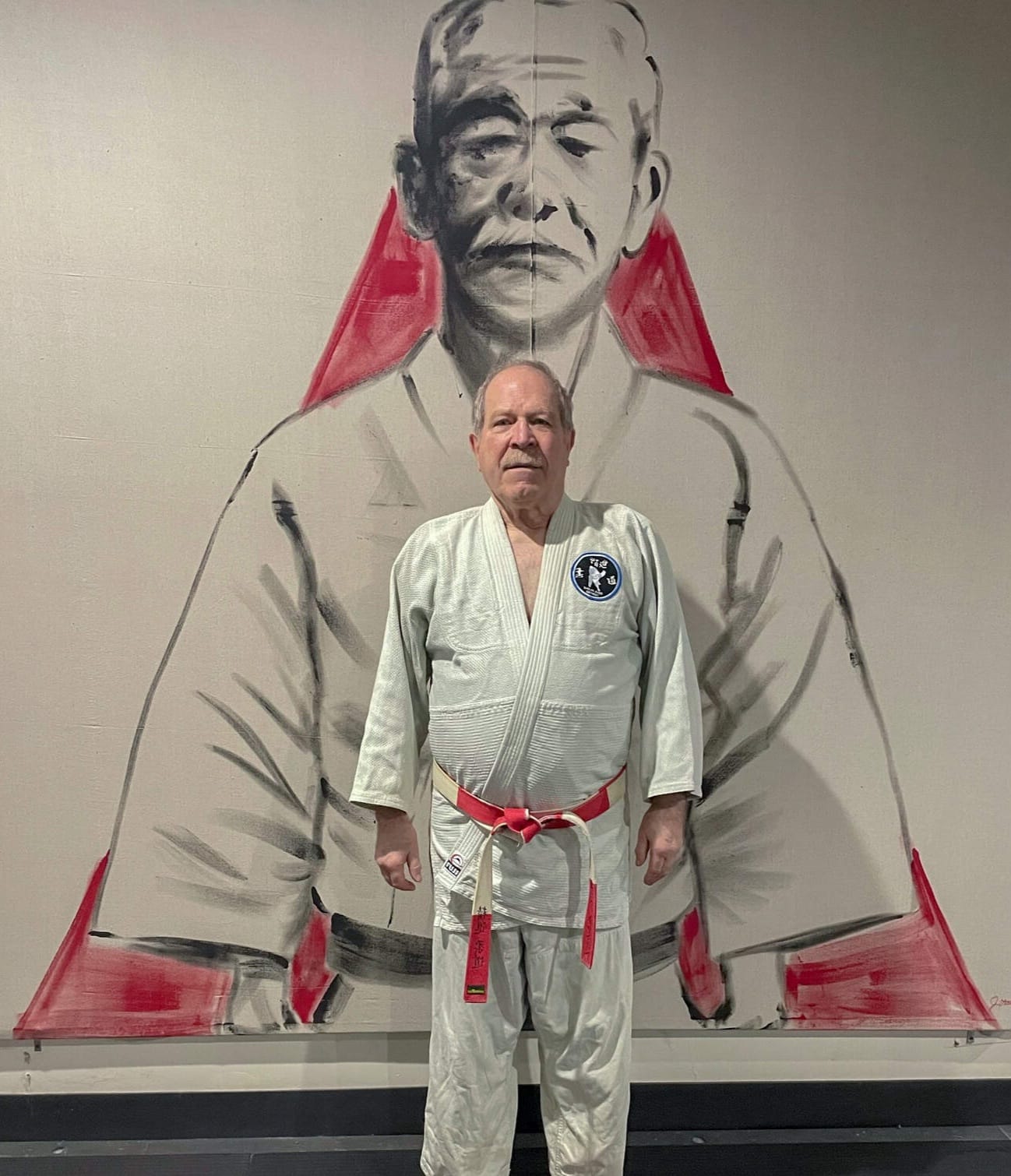
I have an appreciation for the art and sport of Judo; this has grown due to a very special dojo called Shojin Judo. At Shojin, students enjoy partaking in some of the best judo class sessions. It is not easy work, but is it worth feeling at peace during and after walking through the front door? This place is filled with energy, acceptance, willingness to learn, and the willingness to teach. Shojin Judo is a safe place where one can fully engage in Judo; it is done non-judgmentally, objectively and one-mindful. This is achieved peacefully, while focusing only on what you are doing with each movement.
Shojin Judo has a dojo full of top-notch instructors. They are all teaching in such a way that each pupil can retain various important components to practicing Judo. Each one of the senseis at the dojo is phenomenal! What is interesting is that all senseis have a different way of describing the techniques that are fundamental in Judo. They methodically teach Judo techniques so that all individuals remain as safe as possible and retain as much as they are able.
Everyone has something to contribute to the benefits of their peers learning. As you switch partners to practice Uke (“to receive”) and Tori (“to take”, AKA nage “thrower”), one will likely learn something new each time or better perfect a technique. The head youth instructor, frequently states that everyone is on a unique personal journey. I believe that she has been a judoka and practiced under Neil for eight years. She has a calm demeanor, is great with children and adults alike, and her wisdom surpasses her age. The new successor, and head instructor, is always willing to teach and aid students. I have yet to hear anyone say no, I will not help you out.
Nikolai’s and Heather’s journeys
At a pivotal moment in my family’s life, my son Nikolai and I found more than we could have imagined to. We were both searching for something more in life. Whether it was mindfulness, self-discipline, structure, exercise, or a sense of belonging – we both found those attributes and more. This was thanks Shojin Judo! Initially, my son wanted to attend Judo classes. He had practiced Brazilian Jiu-Jitsu (BJJ) several years prior to embarking on a journey that he quickly grew fond of. We found this wonderful dojo. Months after Nikolai joined Shojin, so did I. Although, I did not hit the mats as frequently as Nikolai. Optimistically, let us hope for more to come! Nikolai took a several month break to wrestle in school, but he will be back in Judo soon.
When I was a teenager, I wanted to take a martial art for self-defense. Therefore, I decided to take Judo classes at Farmington Hills, Michigan YMCA. The sensei at the YMCA was a great instructor, and he now teaches Shojin Judo and currently holds a sixth dan.
It was to my surprise that this sensei who had taught me some Judo in my teen years would become a part of my life once again. This means that there must be a reason that Nikolai joined Shojin Judo. Perhaps it means that he has found his safe space, with peers and senseis he can feel confident and comfortable with. My hope is that Nikolai sticks with Judo at the current dojo. I feel it will help shape him into the adult he will eventually become.
Conclusion
Reflecting on our short journey with Shojin Judo thus far, the dojo is more than a place to learn martial arts; it is a nurturing community that fosters personal growth, resilience, and a sense of belonging. The dedication of Neil Simon and all the senseis has left a profound mark within the dojo and in the Judo community. As the judoka continue to practice, learn, and evolve together, they will form a bond and have and grow together. Shojin Judo is seen as a family. I feel that it is something beautiful! I believe that people cross paths for a reason. Neil Simon recently passed away. Prior to passing he had appointed a successor for Shojin Judo. He knew what he was doing by placing specific individuals in each role. While I am grateful to Neil for what he has built for future generations to enjoy, it is unfortunate that he is gone. I must say Neil has trained some of Shojin’s senseis and they are unbelievable. These individuals are not only great Judokas and instructors, but genuinely good people!

Combat Sports & Martial Arts Writer| Partnership Marketing and Digital Strategy Lead (Combat Sports)
I have been an avid viewer of Boxing and MMA for almost three decades. Since 2001, I have enjoyed watching the UFC. I hold an academic background in Gerontology from Madonna University, and spent 25 years working across both clinical and non-clinical healthcare settings. But a lifelong passion for writing and martial arts eventually pulled me toward a new chapter. Today, I write for FightMatrix.com. Additionally, I interview professionals in the Combat Sports sector.