
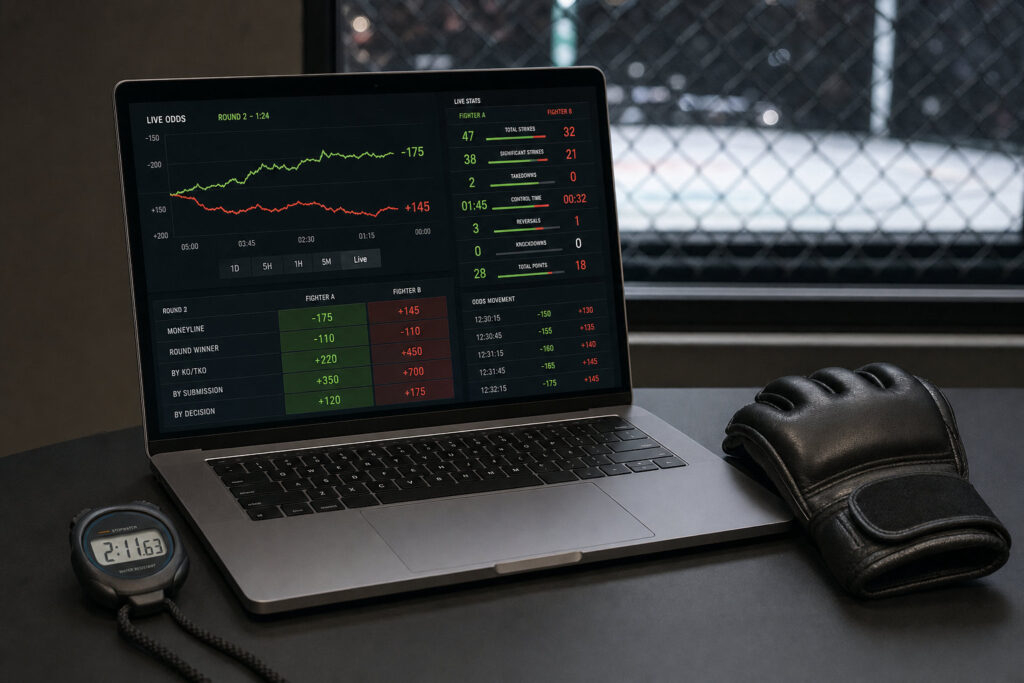
Live data streams have transformed in-play betting on MMA by providing real-time information that shapes odds and market decisions. Bettors now rely on rapid, accurate feeds to interpret what’s happening inside the cage, where every second counts. Understanding how these data flows work helps explain why in-play MMA betting offers unique risks and opportunities compared to pre-fight wagering.
Unlike pre-fight markets, in-play MMA betting is fundamentally influenced by the speed, accuracy, and timing of live data streams. Discussions in betting communities, including references to tuhti casino, especially as events unfold move by move, can highlight just how sensitive odds are to what happens in real time. When placing a wager during a fight, users depend on instant access to changing information. Subtle delays or differences in how data is processed can mean bets are based on either the latest cage action or slightly outdated events, with significant implications for fairness.
The technology powering live sports data delivery
A live data stream is a direct digital feed capturing the official outcomes and statistics from each moment of the fight. After every strike, takedown, or round end, specialized staff or automated trackers send this data through secure networks to odds providers and sportsbooks. The entire process depends on minimizing delays, known in the industry as latency, to allow in-play markets to reflect developments as close to instantaneously as possible.
Key terms such as data feeds, latency, and synchronization are common for anyone exploring in-play betting. Data feeds describe the streams of live event information sent to sportsbooks. Latency refers to the total delay from the action in the cage to what you see reflected in the odds. Synchronization ensures all market participants act on similar information at the same time, aiming to keep betting fair.
Fight events that trigger market movements in real time
In-play MMA markets respond to a series of signals picked up by live data streams. Every clean strike, knockdown, takedown, or reversal is logged as a potential cause for instant odds updates. Key metrics like control time and submission attempts provide further context that oddsmakers use to calibrate live prices.
Automated and manual inputs also track round scoring cues, even before official results from judges are confirmed. Here, unofficial signals from cage observers can sometimes differ from what the judges ultimately decide, creating moments where market prices change dramatically before round outcomes are officially announced. Bettors should be aware that fast-moving events inside the cage can cause odds to shift rapidly, sometimes on signals that have not yet been formally verified. This complexity highlights the balance between accuracy and the need for speed in live data processing.
Managing latency and ensuring market integrity during volatility
In-play betting on MMA faces a unique challenge: delays between action in the cage and data reaching bettors introduce an ongoing fairness question. Short latency often favors those with the fastest data feeds or advanced viewing setups, since they act on information before others see it reflected in odds. This arms race creates pressure on sportsbook operators to standardize market timing.
To address sudden spikes or unexpected fight-ending sequences, many operators use suspensions and bet delays. These measures temporarily pause wagering following significant moments, like a knockdown or submission attempt, until the relevant data is validated. This helps to ensure that no one can exploit split-second knowledge of decisive events. Bettors should recognize these stops as normal safeguards within a rapidly changing environment, rather than errors or technical failures.
Data processing, broadcast delay, and their impact on perception
The journey from live cage action to odds on your screen involves multiple layers of processing. Automated models apply statistical and historical data to interpret real-time fight events and calculate the likely probability shift for each outcome. This system means that occasionally, extremely visible moments, such as a spectacular strike, have a greater short-term effect on odds than more subtle but sustained rounds of control.
Broadcast delays, different camera angles, and even commentator opinions can create discrepancies between what viewers see and the real-time data used by oddsmakers. As a result, watching a stream or traditional TV broadcast may put you several seconds behind the live data feed, emphasizing the importance of relying on market signals as much as visuals. For in-play MMA betting, understanding the gap between perception and data-driven action is key to making informed decisions.