
Ways Working Fighters Balance Trade Jobs
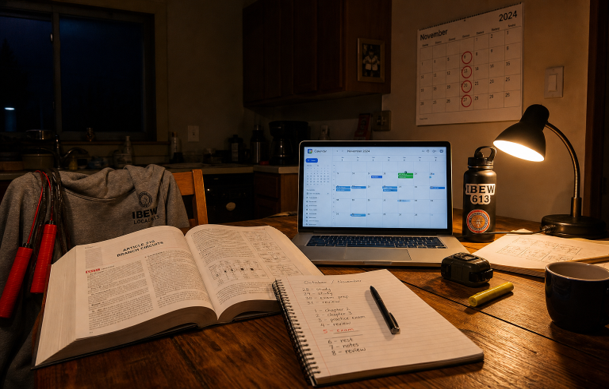
A regional fight camp costs between $1,500 and $4,000 once you add up training fees, sparring gear, weight-cut supplements, travel, and the hours of work you lose in the final week.
The purse at that level rarely covers half of the total expense. A fighter working a 40-hour electrical apprenticeship, training five days a week, and competing three times a year is not running two separate lives.
They are running one financial system, and the trade is what keeps it solvent. The fighters who last stop treating the sport and the job as enemies. They start managing them as a single cohesive schedule.
Here are six ways working fighters make it work without burning out the job or killing the career.
1. Front-Load the Books in the Off-Camp Block
During a full camp, the available mental bandwidth drops to zero. Early mornings, double sessions, weight management, and the mental load of fight preparation aggressively compete with NEC code study.
Trying to work through electrical licensing material when your body enters peak-week mode is an arithmetic problem rather than a discipline issue. There are only so many hours in a day, so camp claims most of them.
The off-camp window immediately following a fight serves as the highest-yield study period a working competitor has. NEC licensing exams feature flexible scheduling, while the fight calendar does not.
Building the study plan around the sport allows you to accurately gauge readiness using resources like Dakota Prep’s journeyman electrician practice test before the next intensive training cycle begins.
Off-camp functions as the base-building block for the journeyman license in the exact same way it does for strength and conditioning work.
2. Take the Fight-Week Hit on Purpose
Fight week clashes directly with productive trade work. The mental and physical load spikes because your sleep patterns change, your weight drops, and your focus belongs entirely to the bout.
Pretending otherwise creates an unnecessary scramble on the job site. Most working fighters mistakenly treat fight-week absence as an unplanned event rather than an unavoidable block to manage in advance.
Three proactive moves fix this scheduling collision. Request the days off the moment the fight gets booked rather than waiting until the month of the event.
Front-load any trade tasks or project handoffs in the two weeks prior so nothing is left hanging when you go quiet.
A contractor who plans around a known deadline retains the client, whereas disappearing without notice damages professional trust immediately.
The required conversation takes about 30 seconds to explain that you have a competition in eight weeks and will have all shifts covered before taking Thursday and Friday off. Setting those expectations early solves the problem before it becomes a disciplinary incident.
| Pro Tip: Ask for fight-week days off the moment the bout is booked; front-load work the two weeks prior so nothing is left hanging. Early notice turns a potential incident into a planned absence. |
3. Study in the Dead Time the Sport Already Takes
Combat sports come with built-in waiting periods that drain your productive day. A long commute to the gym as a passenger or a weigh-in queue at a regional show eats up valuable hours.
The gap between a morning session and an afternoon job rarely leaves enough room to drive home. That time is permanently spent sitting in a car or standing in a hallway.
Redirecting those trapped minutes to NEC code review or practice questions on a phone costs nothing in sleep or physical energy. This habit accumulates across weeks far more efficiently than passive review at a desk.
Fatigue makes focus difficult after a hard session, but pulling 20 minutes toward licensing study requires zero additional sacrifice. A laptop between sessions proves unrealistic, so relying on mobile access becomes the only format that fits the lifestyle.
4. Run Practice Exams Like You Run Sparring
Highlighting NEC articles and reading them repeatedly builds familiarity rather than retrieval. The journeyman exam does not ask whether you have seen an article before.
It tests whether you can locate the rule, interpret it correctly, and apply it quickly under strict timed conditions. That creates a retrievability problem that passive reading simply cannot solve.
The sparring parallel translates directly to test preparation.
Watching tape provides useful preparation, but it fails to simulate a live opponent actively walking you down.
Timed exam-style sessions reveal the actual gaps that cost points when it counts.
The common mistake involves sitting the real exam after months of passive review and missing the mark by a few points, so utilizing timed NEC practice tools ensures you find weak spots in a practice run instead of on test day.
| Key Insight: Re-reading the codebook is like watching tape; it builds familiarity, not retrieval. Timed practice exams, like sparring, reveal the real gaps under pressure and prevent failing by a few points. |
5. Tell the Employer the Truth About the Calendar
Most fighters hide their competition schedule from their employer. They assume that a foreman who finds out about a weekend bout will immediately start looking for a replacement.
The evidence points to the exact opposite outcome.
Competitors who disclose early and provide specific dates consistently keep the job, while those who call in with vague explanations often face termination.
Early disclosure succeeds based on basic project communication. An employer who knows about the event a month in advance can reassign tasks, shift deadlines, or cover a crew slot.
A manager who finds out the morning of weigh-ins cannot make those adjustments, so they only remember the disruption. Keep the conversation short by naming the exact dates you need off and explaining how you will cover the work beforehand.
A reputation at work for reliability compounds over years. The uncomfortable conversation happens once, yet the consequence of avoiding it can follow a tradesperson indefinitely.
Establishing that trust gives you a reliable fallback option when the athletic window eventually closes.
6. Use the License as the Exit Plan
Every competitive combat career encounters a hard ceiling due to age, accumulated injuries, or family obligations. A journeyman or master electrician license easily outlasts that athletic ceiling by three decades.
Recent Bureau of Labor Statistics data puts the median annual wage for electricians at $62,350. Securing that credential converts the trade from a temporary survival mechanism into a long-term professional asset.
This qualification provides a direct path to contracting, business ownership, or a supervisory role that keeps you off the physical tools as your body ages.
The immediate payoff matters just as much because a formal qualification gives a fighter the standing to decline a bad bout.
Taking a short-notice fight at the wrong weight or facing a dangerous opponent for low money ruins the body before a grueling week on the job site.
Without the license, every match becomes a forced financial decision where a small purse looks more attractive than it should. Holding the credential ensures you only accept the matchups that actually advance your record.
| Key Insight: A journeyman license outlasts a fight career by 20-30 years, converting a survival trade into a long-term asset and giving the fighter the standing to decline risky bouts without financial penalty. |
The Bottom Line
Managing them deliberately prevents burnout while protecting your primary source of income. Periodized study keeps electrical licensing progress moving without wrecking your gym schedule.
Planned fight-week disruption remains highly survivable when communicated early to the employer, whereas unplanned absences destroy professional trust.
Utilizing targeted NEC exam prep tools under real test conditions turns months of codebook review into a passing score rather than a costly second attempt.
The resulting journeyman license serves as the instrument that makes the fight career strictly voluntary. When the regional purse fails to cover the camp expenses, the trade steps in to fund the deficit.
| Author Profile: Dakota Prep operates as a comprehensive digital education platform specializing in National Electrical Code (NEC) exam preparation for electricians across all 50 United States. |