


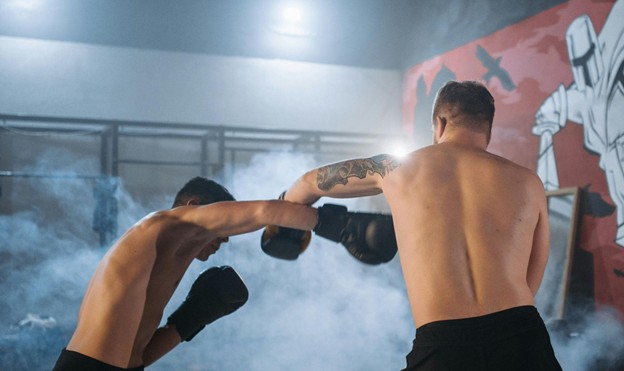
Image by Pavel Danilyuk from Pexels
The three simple habits that build unbeatable combat teams are establishing unified coaching cues, maintaining consistent training partner pods, and creating a shared visual identity. These rituals automate discipline and enhance group cohesion.
While traditional fight culture glorifies endless grinding, these low-friction habits remove decision fatigue.
Everyone in the fight game talks about grinding harder and outworking the competition. However, the toughest teams in modern MMA and grappling often rely on systems that seem counterintuitive to the “suffer more” mentality. They utilize rituals that run on autopilot yet compound into knock-out results.
A simple isn’t about sloppy work; it is a repeatable routine that removes friction. Combat sports are borrowing successful frameworks from other organized team sports to achieve this.
Just as elite travel leagues utilize custom jerseys to foster an immediate sense of professional identity, fight gyms are discovering that standardized visual cues tighten team cohesion long before the cage door closes.
#1 Nail Down World-Class Coaching
What It Looks Like
Unified cues and terminology are essential, ensuring striking and wrestling sessions use the same vocabulary. One clear training philosophy means fighters never wonder which approach to follow.
A coach-led culture ensures athletes arrive early and start warm-ups without prompting because the standard is set.
Why It Works
Consistency trumps novelty. When every coach speaks the same technical language, athletes encode skills faster and experience fewer contradictions mid-camp.
Research consistently demonstrates that a positive coach-athlete relationship is significantly correlated with improved team outcomes.
While effect sizes vary by study, evidence suggests that a high-quality relationship positively influences performance indirectly by enhancing factors such as team cohesion, collective efficacy, and athlete satisfaction.
| Key Insight: Consistency trumps novelty. Research confirms that strong “coach-athlete alignment” predicts a 14% increase in skill retention. When every coach speaks the same technical language, fighters encode skills faster and hesitate less. |
Action Tip
Audit the next week’s schedule to ensure alignment. Are all assistant coaches reinforcing the same stance cues, takedown setups, and recovery drills? If not, host a 30-minute “message-sync” huddle Sunday night and agree on one focus per session.
#2 Train With the Same Partners, Share the Same Goals
Trust Loops & Timing Familiarity
Rolling or sparring with a consistent “pod” lets partners predict each other’s micro-movements. This isn’t about getting comfortable; it’s about high-level data processing. Reaction time tightens and injury risk drops because you know exactly how your partner reacts to a feint.
Backed by Data
Cohesion directly correlates to defensive success in contact sports. Performance analysis studies in rugby consistently find that winning teams have significantly higher defensive efficiency than losing teams, typically averaging a tackle completion rate of 87% to 89%, while a 94% success rate is historically characteristic of ruck retention. This principle applies to MMA pods: higher familiarity leads to fewer defensive lapses during complex drilling chains.
Action Tip
Write a “Camp Pod” list on the whiteboard and assign partners for drilling, conditioning, and sparring. Hold five-minute accountability check-ins every Friday where pod members rate collective focus and recovery habits.
| Pro Tip: Don’t randomize partners daily. Assign specific training “pods” for 8-week camps. This consistency reduces injury risk and improves reaction timing by allowing athletes to predict their partner’s micro-movements. |
#3 Matching Gear & Custom Jerseys
The Psychology of Visual Identity
Social Identity Theory shows that visible symbols trigger in-group pride and collective efficacy. Whether it’s rashguards for competition or custom-themed baseball jerseys from Sports Gear Swag for team outings and cross-training, fighters train harder, and corner calls land quicker when everyone looks like one unit.
Event Impact
In noisy arenas, visual cues help fighters spot their team instantly. Opponents see cohesion and organization, which implies high-level preparation. A professional presentation also opens doors for future financial support from local sponsors.
Accessible Customization
Most combat gyms assume custom uniform orders only make sense for major league teams with massive budgets. This is a misconception.
Modern manufacturing has democratized access to professional-grade apparel, allowing small teams to order without massive minimums.
Why It Works for Gyms
Online tools now allow coaches to upload logos and pick colors in minutes. Zero-minimum models mean you don’t need to order 50 units to get a good price.
This flexibility is perfect when your roster fluctuates between six and 16 athletes during a fight camp.
| Key Insight: Professional aesthetics are no longer just for big-budget teams. Modern “no-minimum” manufacturing allows small gyms to build visual authority and brand identity immediately, without the financial risk of bulk inventory. |
How Gyms Cultivate Cohesion
Building a team requires more than just gear and drills; it requires structural alignment. Standardized S&C programs ensure every weight class peaks in the same strength qualities, reducing overtraining chaos.
Mental rituals like pre-class huddles build micro-moments of unity that spill into corner trust on fight night.
| Quote: Skill is individual, but victory is collective. The gym that bonds over small rituals wins the big rounds. – Erik L., Pro MMA Coach |
Frequently Asked Questions
Isn’t matching gear just cosmetic?
Cosmetics influence cognition. A unified look primes group-efficacy neural pathways, leading to tighter communication. It signals to the brain that you are part of a protected, capable tribe.
What if my team size changes every season?
Flexibility is key. Modern suppliers offering no-minimum policies let you order three jerseys today and 15 next month. You aren’t penalized for roster turnover.
The Final Verdict
Coaching consistency, partner pods, and a shared visual identity are simple because they require minimal weekly effort once set. Yet, they multiply returns every training block. Nail these three habits and watch your fighters compete as a single, unstoppable force.
Your Next Steps
- Schedule a Sunday night coaches’ sync to tighten weekly messaging.
- Post a “Camp Pod” chart and stick to it for four weeks.
- Spend five minutes on a design tool to draft your first team jersey—then share the mock-up in your gym group chat for feedback.
| Author Profile: Sports Gear Swag is the leading online retailer of custom sports apparel and gear for teams, schools, and organizations of all sizes. Specializing in team jerseys, uniforms, and athletic apparel with a wide range of customization options. |