


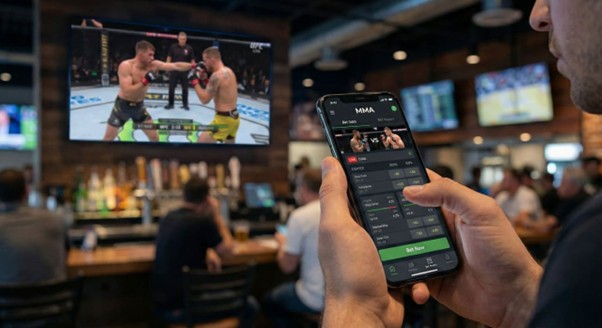
Ten years ago, betting on a UFC fight meant visiting a sportsbook window, filling out a slip, and waiting three days for a payout. Today, a fan in Lagos or London can place a live in-round bet on a guillotine choke attempt from a mobile app — in under six seconds. That shift is not cosmetic. It reflects a fundamental restructuring of how combat sports intersect with digital finance, data infrastructure, and fan engagement.
The white label sportsbook solution market has played a central role in this transformation, giving operators, media brands, and MMA-focused startups the tools to enter the betting space without building proprietary technology from scratch. The MMA and boxing betting market was valued at $3.2 billion in 2024 and is projected to reach $6+ billion by 2033. The fighters draw the crowd. Technology captures the revenue.
The Numbers Behind MMA Betting Growth
Combat sports betting was once an afterthought on major sportsbooks — a handful of moneyline markets buried beneath football and basketball tabs. That era is over. UFC GGR (Gross Gaming Revenue) has grown at an estimated CAGR of over 18% in the past five years, outpacing almost every other major sport in percentage terms.
The global MMA and boxing betting market, valued at $1.5 billion in 2024 by some estimates and $3.2 billion by others depending on methodology, is forecast to grow at a CAGR of 9–14% through 2033. What drives that growth is not just the sport’s popularity — it is the quality of the wagering experience that technology now enables. The UFC itself generated $1.4 billion in total revenue in 2024, a 9% year-on-year increase, with media rights and live events as the primary income streams. Where eyeballs concentrate, betting volume follows.
| Market Metric | 2024 Value | 2033 Projection | CAGR |
| MMA & Boxing Betting Market | $1.5–3.2B | $3.2–6B+ | 9–14% |
| Global Sports Betting Market | $100.9B | $187–235B | 10–14% |
| UFC Annual Revenue | $1.4B | N/A | ~9% YoY |
| UFC Betting GGR Growth | — | — | ~18% CAGR |
Sources: Verified Market Reports, Grand View Research, TKO Group Holdings, Gaming America
Why UFC Specifically Drives Betting Engagement
The UFC’s structural properties make it uniquely suited to betting. Each card is a discrete, finite event — no seasons, no draws, no ties. Every fight produces a binary result within a predictable timeframe. Oddsmakers can price markets cleanly. Bettors understand the stakes immediately.
High-profile fighters like Conor McGregor, Khabib Nurmagomedov, Israel Adesanya, and Canelo Álvarez function as individual brand entities capable of generating single-fight betting volumes that rival full weekends of lower-tier football. Fan loyalty is tribal and intensely emotional — exactly the psychological profile that drives repeat betting behavior.
How Technology Transformed the Betting Experience
The mechanics of MMA wagering have evolved beyond recognition. The original market was simple: bet on who wins. Modern sportsbooks now offer dozens of prop markets per fight, many updating in real-time during the bout itself.
Technology enables this level of granularity through:
- Real-time data feeds from providers like Sportradar that track strike accuracy, takedown attempts, and control time per round
- AI-powered odds engines that recalculate probability with each significant event inside the cage
- In-play cash-out functionality allowing bettors to lock in profits or cut losses mid-fight
- Predictive analytics dashboards surfacing historical matchup data, fighter tendencies, and head-to-head statistics
- Mobile-first UX optimized for the live event environment — short attention span, high adrenaline, one thumb
The Polymarket-UFC partnership announced in late 2025 illustrates where this is heading. UFC broadcasts will integrate prediction market technology directly into live events, visualizing real-time fan sentiment shifts during fights on-screen. This is the convergence of media and wagering that the industry has anticipated for a decade.
AI, Data, and Personalization
Static odds boards belong to a previous generation of sportsbook design. Modern platforms deploy machine learning models that personalize the betting interface based on individual user behavior — surfacing markets the user is statistically likely to engage with, adjusting bonus offers based on betting history, and flagging value opportunities aligned with past wager patterns.
For MMA specifically, AI tools can process a fighter’s last 20 bouts, extract grappling-to-striking ratios, historical performance under pressure, and cardio degradation curves — then present that analysis in a format accessible to a casual fan, not just a trained analyst. Data democratization is closing the information gap between sharp bettors and recreational ones, keeping recreational bettors engaged longer.
The Crypto Layer in Combat Sports Wagering
Cryptocurrency has moved from fringe payment method to mainstream betting infrastructure, particularly in MMA wagering. The demographic overlap is striking: UFC’s core audience skews young, male, and technically literate — the same profile that drove early crypto adoption.
The appeal is functional, not ideological:
- Instant deposits and withdrawals without banking intermediaries
- Privacy for users in jurisdictions with ambiguous betting regulations
- No chargeback risk for operators, reducing fraud exposure
- Cross-border functionality allowing fans in restricted markets to participate
- Provably fair mechanisms on crypto-native platforms that publish verifiable RNG outcomes
Crypto sportsbooks targeting MMA fans have proliferated rapidly in markets where traditional payment processors maintain restrictions. For operators, accepting Bitcoin or Ethereum can open user acquisition channels that fiat-only platforms cannot access at all.
Regulatory Friction and Market Opportunity
The cryptocurrency betting layer exists partly because traditional regulation has moved slowly. This creates both opportunity and risk. Operators building on crypto infrastructure must still address KYC and AML obligations — most jurisdictions now require compliance regardless of payment method.
The practical reality: crypto is a payment rail, not a regulatory bypass. Operators who treat it as one face growing enforcement exposure as regulators in the US, EU, and Southeast Asia extend oversight to crypto-native platforms. Building compliance into the stack from day one is the only durable approach.
Media Brands Entering the Betting Space
Fightmatrix, MMA Fighting, Bloody Elbow, Tapology — the MMA media ecosystem has spent years building audiences of millions of deeply engaged combat sports fans. These audiences analyze fighter records obsessively, consume statistical breakdowns, and engage with odds content organically.
The monetization model has historically been advertising and subscriptions. The ceiling on those models is visible. Affiliate commissions from sportsbook referrals improved the picture — but they remain a fraction of the value that sits in those audiences.
The logical evolution is direct participation in wagering revenue. A media brand with 500,000 monthly active users who already discuss betting odds has a product-market fit that most standalone sportsbook operators would pay heavily to acquire. For combat sports brands looking to monetize their massive audiences, integrating a reliable white label sportsbook solution has become the most efficient way to enter the betting market safely — without building proprietary technology, without hiring a team of 40+ engineers, and without the 18-month development cycle that custom platforms demand.
How White Label Works for Combat Sports Operators
A white label sportsbook solution is a fully built, licensed-ready betting platform that a brand deploys under its own identity. The provider owns the technology stack. The operator owns the customer relationship, the brand, and the market strategy.
For an MMA media brand, the integration model looks like this:
- Audience analysis — identify what percentage of existing users engage with odds content, fighter stats, or betting discussions
- Jurisdiction mapping — determine which regulatory markets are accessible given the existing user base
- License acquisition — select the appropriate licensing jurisdiction (Curaçao for emerging market speed, MGA for EU credibility)
- Platform deployment — white label provider delivers the full stack in 4–12 weeks
- Brand integration — custom front-end styling, embedded content widgets, and editorial-betting crossover features
- User migration — existing audience introduced to the betting product through editorial content rather than cold acquisition
The revenue model shifts from advertising CPM to GGR margin participation. A 7% margin on $50/month average wager per active bettor at 10,000 users generates $35,000 GGR monthly — before marketing costs, with a user base that was already free to acquire through existing content.
Choosing the Right Technology Partner
Not all white label sportsbook providers cover MMA with equal depth. A platform built primarily around football and basketball will offer thin fight-card coverage, limited prop markets, and odds feeds that lag high-quality MMA-specialist pricing. For a combat sports brand, these gaps are immediately visible to the audience — and immediately damaging to credibility.
The technical requirements for an MMA-optimized sportsbook include:
- Comprehensive fight card coverage — UFC, Bellator/PFL, ONE Championship, BKFC, local promotions
- Deep prop market libraries — method of victory, round betting, distance markets, fighter-specific specials
- Live in-fight betting engine with sub-second odds refresh capability
- Fighter statistics integration — linking bet placement UI to historical record data and matchup analysis
- Mobile optimization for live event contexts where users are watching simultaneously
- Flexible bonus tooling — fight-specific promotions, enhanced odds on headline bouts, loyalty structures
Providers such as BetConstruct, Digitain, Sportingtech, and SBTech offer configurable platforms that can be tuned toward combat sports coverage. The operator’s job is to evaluate coverage depth — specifically the number of MMA markets offered per event — before signing a commercial agreement.
The Build-vs-Buy Calculation for MMA Platforms
The economics of custom development in sports betting are prohibitive for any operator below significant scale. The cost breakdown for a custom MMA sportsbook build illustrates why:
| Component | Custom Build Cost (est.) | White Label Equivalent |
| Sportsbook engine development | $800K–$2M | Included in rev-share |
| Odds feed licensing (Sportradar) | $200–500K/year | Included or bundled |
| KYC/AML compliance stack | $100–300K | Included |
| Payment gateway integrations | $50–150K | Included |
| Risk management tooling | $200–400K | Included |
| Time to market | 18–24 months | 4–12 weeks |
For a media brand or regional operator whose core competency is audience, content, and local market knowledge — not software engineering — white label is not the cautious option. It is the strategically correct one.
The Road Ahead for MMA Betting Technology
The next wave of MMA betting innovation sits at the intersection of live broadcast technology and real-time data. The UFC’s deal with Polymarket is an early signal. Augmented reality overlays during broadcasts, showing live odds and sentiment data within the fight feed, are in active development across multiple providers.
Wearable biometric data — heart rate, cortisol proxies, movement velocity — collected from fighters during bouts represents the most contentious frontier. The data exists. The infrastructure to transmit it in real time exists. The regulatory and ethical frameworks governing its use in betting markets do not yet exist. Operators paying attention now will be positioned when those frameworks crystallize.
Social Betting and Community-Driven Wagering
The social dimension of MMA betting is structurally underserved by current platforms. Betting communities on Reddit, Twitter, and Discord already function as informal prediction markets — fans share picks, argue over odds, and track their own records. Platforms that formalize this behavior through group betting pools, leaderboards, and social feeds integrated into the wagering interface will capture significant engagement from audiences that existing sportsbooks miss entirely.
The MMA fan base is one of the most analytically engaged sports audiences on the planet. It consumes statistics obsessively, debates fighter metrics at a granular level, and already speaks the language of probability and matchup analysis. That is not just a betting audience. It is the ideal one.