


Mixed martial arts has always looked chaotic from the outside. Two athletes. One cage. Endless variables. Yet behind the apparent unpredictability, a quiet revolution is unfolding. It is powered by numbers, algorithms, and structured observation.
Today, MMA analytics is not a luxury. It is a necessity.
Fighters and coaches now rely on detailed fight performance metrics: strike accuracy, significant strikes absorbed per minute, takedown defense percentage, control time, recovery rate between rounds, and even micro-movements tracked through wearable sensors. What once depended on instinct and experience is increasingly supported by measurable evidence.
Statistics reveal the shift clearly. According to aggregated fight data from major promotions, athletes who maintain a striking accuracy above 50% while keeping strike absorption under 3.0 per minute have a significantly higher win rate — often exceeding 65%. Small margins matter. Tiny adjustments change outcomes.
This is where combat sports strategy becomes scientific. Patterns are mapped. Tendencies are isolated. Weaknesses are quantified.
And champions are built with spreadsheets as well as sweat.
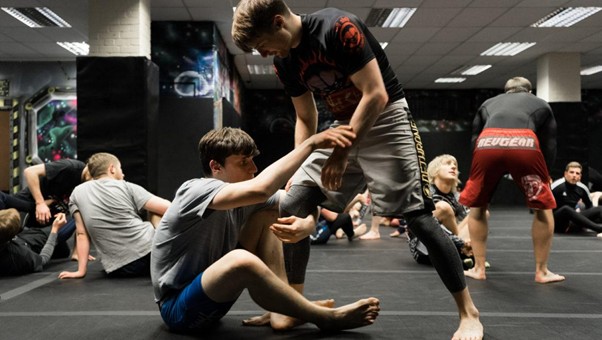
https://nextgenerationmma.co.uk/open-mat/
Cybersecurity and Global Access to Training Intelligence
The growth of data-driven systems also means that fighters and teams depend heavily on digital tools. Training footage, biometric data, and strategic breakdowns are stored and shared online. Protecting this information is critical. A leaked game plan can alter the entire outcome of a bout.
For this reason, many teams use VPN technology to protect communications and gain secure access to international databases. Whether reviewing overseas opponent footage or connecting to foreign analytics platforms, cybersecurity becomes part of modern fight preparation. Tools that help secure your app allow teams to encrypt sensitive performance data and safely access web resources that might otherwise be restricted in certain regions. In a sport where preparation can determine victory, secure connectivity is no longer optional; it is an operational strategy.
Measuring What Wins: The Rise of Fight Performance Metrics
Numbers tell stories that the eye often misses.
For example, control time used to be viewed simply as dominance. Now, deeper analytics separate passive control from effective control. Did the athlete land damage? Did they advance position? Did they force defensive reactions?
Detailed fight performance metrics now include:
- Significant strike differential per round
- Clinch efficiency ratio
- Ground transition speed
- Heart rate variability during recovery
- Reaction time under fatigue
In elite competition, endurance decline in the third round can increase strike absorption by up to 18%. That is not a guess. It is measured.
By analyzing this data, coaches can tailor athlete endurance training to specific needs. A fighter who fades late may require interval conditioning that mimics real fight pacing, rather than generic cardio sessions.
Data transforms training from generalized effort to targeted adaptation.
Athlete Endurance Training: Precision Over Tradition
Traditional conditioning focused on volume: more miles, more rounds, more repetitions.
Modern athlete endurance training focuses on efficiency.
Instead of running five miles at a steady pace, fighters may complete high-intensity intervals that replicate the 5-minute round structure. Sensors monitor oxygen consumption and lactate thresholds. Coaches adjust workloads based on recovery metrics, not guesswork.
Performance labs have shown that fighters who integrate heart rate–guided conditioning programs improve late-round output by approximately 12–15% over a 12-week cycle. That improvement often translates directly into decision victories or late finishes.
Endurance is no longer about suffering longer. It is about sustaining power strategically.
Predictive Sports Data and Smarter Game Plans
What happens when historical fight data meets machine learning?
You get predictive sports data models.
These systems analyze thousands of past bouts. They identify patterns: how southpaws perform against orthodox wrestlers, how reach differentials affect jab accuracy, how altitude influences cardio output. While predictions are never absolute, probabilities become sharper.
A fighter preparing for an opponent with a 70% takedown success rate might simulate defensive scenarios in 60% of training exchanges. Preparation aligns with likelihood.
Here, data-driven coaching becomes visible. Coaches use predictive dashboards to prioritize drilling time. If analysis shows that an opponent slows significantly after failed takedowns, the strategy may focus on forcing those attempts early.
Numbers don’t replace intuition. They refine it. But the demands on the security of these numbers are also growing. Tools like VeePN help not only protect data but also ensure free movement online. Worldwide battles, international research, broadcast recordings, and much more become accessible everywhere with a VPN.
Mixed Martial Arts Rankings and Objective Evaluation
Rankings once depended heavily on perception and promotion. Now, data plays a growing role in shaping mixed martial arts rankings.
Advanced scoring models weigh opponent strength, strike efficiency, submission attempts, and defensive consistency. Analysts calculate performance indexes that compare fighters across divisions.
Consider this: a fighter on a three-win streak with high damage absorbed may rank lower in data-based models than an athlete with fewer finishes but superior efficiency metrics. Longevity matters. Sustainability matters.
As fans become more analytics-aware, transparency in rankings increases engagement. Debate shifts from opinion to evidence.
It does not eliminate controversy. It elevates it.
Performance Optimization: Marginal Gains, Maximum Impact
The phrase performance optimization sounds clinical, but in MMA it means something very human: survival and success.
Small gains accumulate. A 5% improvement in takedown defense. A 3% increase in striking accuracy. A slightly faster recovery between rounds. Each adjustment compounds.
Sports scientists often reference the “1% principle,” where incremental enhancements produce exponential long-term results. In MMA, where rounds are short and margins thin, that principle is amplified.
Training camps now integrate:
- Sleep tracking for recovery optimization
- Nutrition periodization aligned with training phases
- Cognitive reaction drills to sharpen decision-making under stress
- Tactical simulations based on predictive models
This holistic approach blends physical resilience with analytical clarity.
The Future: Strategy and Stamina as One System
The next generation of champions will not choose between instinct and information. They will merge them.
We are entering an era where strategy is calculated, stamina is engineered, and adaptability is rehearsed before the cage door closes. MMA analytics bridges the gap between chaos and control.
Data alone cannot throw a punch. It cannot absorb pressure. It cannot feel fear. But it can inform preparation. And preparation, consistently optimized through data-driven coaching, transforms potential into probability. In a sport defined by uncertainty, analytics reduces randomness without erasing the drama. Fighters still bleed. They still improvise. They still take risks.
Yet behind every explosive combination or perfectly timed submission, there is increasingly a blueprint — shaped by predictive sports data, guided by combat sports strategy, refined through athlete endurance training, and measured by relentless fight performance metrics.
The cage remains unforgiving. The difference is that now, the preparation is precise. Strategy meets stamina. And the next generation of MMA champions is being built — one data point at a time.