


The 2006 Griffin-Bonnar fight forced MMA to evolve. Their three-round war proved the sport needed more than punches, with crafty art and style that was on the way. This demand for richer striking created the modern game: a century of combat knowledge, refined and blended into something entirely new. Fans who spend their weekends studying these stylistic match-ups often find themselves translating that knowledge into odds analysis on licensed Canadian sportsbooks listed through RG, because nothing sharpens your eye for distance and timing like knowing exactly why one style beats another.
Phase 1 – Pure Boxing: The Foundation That Never Left
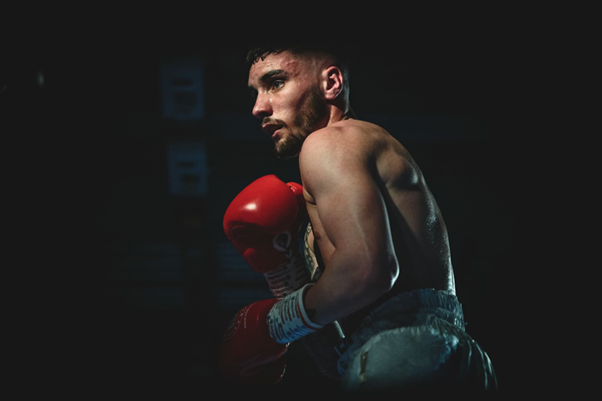
Boxing laid the groundwork for MMA striking. Head movement, jab control, inside angles, body-shot digging, these elements still hold strong. Smaller gloves in MMA change the flow, but the basics of weight transfer and leverage stay the same. Think of it as the sport’s backbone. Fighters like Sean O’Malley borrow Vasyl Lomachenko’s footwork to slip punches and counter. Jon Jones uses James Toney’s shoulder roll to absorb hits without flinching. Israel Adesanya pulls from Floyd Mayweather’s pull-counter to lure opponents in and strike back. These moves prove boxing’s core lives on.
Phase 2: Integrating Muay Thai
The landscape shifted in the 1990s and early 2000s as Muay Thai’s “art of eight limbs” was imported via Pride FC and the early UFC, adding a brutal new dimension to MMA’s striking arsenal. Clinch elbows, damaging leg kicks, teep kicks for range, hands-heavy combinations, these became weapons. Anderson Silva’s elbows from Thailand cut through defenses. José Aldo’s leg kicks shredded Urijah Faber’s mobility. Joanna Jędrzejczyk’s calf kicks, honed in Muay Thai, set a trend before they went mainstream. These additions expanded the toolbox. Muay Thai’s eight limbs turned fighters into complete threats.
Phase 3 – Dutch Kickboxing + American Pressure = The 2010s Hybrid
Dutch kickboxing influenced a new wave. Ernesto Hoost and Ramon Dekkers shaped Alistair Overeem, who then impacted UFC heavyweights. High guards, low-kick setups, immediate sprawls after strikes, these defined the style. Fighters combined kickboxing with takedown defense, going hands-heavy while staying upright. Alex Pereira’s left hook followed by a low kick shows this blend. Justin Gaethje’s pressure with calf kicks adds American grit. This hybrid made striking safer in MMA. It balanced attack and defense.
Phase 4 – The 2020s: Distance Management Becomes the Meta
Long, switch-stance fighters now dominate. Israel Adesanya, Sean Strickland, Stephen Thompson, these players control range like masters. Karate and taekwondo bring side kicks, question-mark kicks, oblique kicks, blitz entries. Whoever owns the final foot of space often owns the fight. It’s about measuring distance without tools, reacting in split seconds. These influences add layers to MMA. Striking now demands precision over power.
The Five Timeless Principles
These core tenets have stood firm for over a century, from 1920 until today, and will remain its foundation.
- The jab controls everything.
- Balance is key for any strike.
- Head movement trumps speed alone.
- Body shots wear down legs more than leg kicks wear down bodies.
- Timing outshines raw power.
These truths anchor the art. They’re the constants in a changing game.
Striking Is a Conversation Across Generations
Striking in MMA is a living conversation across generations. Every slip, counter, and spinning kick connects today’s fighters to a long lineage, from the fundamental roots of boxing to today’s dynamic hybrids. Its beauty is in its constant evolution. To study its history is to join the conversation.